
Marketing to Generations: 2026 Guide for Singapore PMEBs

The age-old approach of treating Asia as a single demographic monolith is the fastest way to drain your 2026 marketing budget. While Singapore boasts a 98.4% internet penetration rate, the way a Baby Boomer on Facebook interacts with a brand is worlds apart from a Gen Z user searching for reviews on TikTok. You've likely felt the pressure of rising acquisition costs while trying to balance traditional heritage with modern digital trends. It's a complex puzzle that requires more than just generic content; it demands a deep understanding of marketing to different generations in Asia.
We've designed this guide to help you master these cultural and digital nuances, ensuring your multi-generational strategies resonate across the APAC region. You'll gain a clear framework for segmentation and learn which platforms actually drive results for each cohort. We also explore how PMEBs can leverage WSQ training and SSG funding to upskill their teams for these specific challenges. By the end of this guide, you'll have the actionable insights needed to lead your brand with confidence in a fragmented marketplace.
Table of Contents
The Evolution of Marketing to Different Generations in Asia: Why Singapore Businesses Must Adapt
Decoding the Asian Demographic: From Baby Boomers to Gen Alpha
Platform Paradigms: Comparing Social Media Usage by Generation in APAC
Practical Implementation: Building a Multi-Generational Strategy Using WSQ Frameworks
Upskilling for 2026: Driving ROI with ClickAcademy Asia’s Strategic Programmes
The Evolution of Marketing to Different Generations in Asia: Why Singapore Businesses Must Adapt
The era of generic mass-marketing in the APAC region has officially ended. By 2026, the diversity of digital adoption across Singapore means that a single campaign message rarely resonates with everyone. Successfully marketing to different generations in Asia requires a move away from broad strokes toward data-driven precision. PMEBs must now act as strategic architects, balancing technological efficiency with deep cultural empathy to maintain a competitive edge. Professionals who master marketing to different generations in Asia can better navigate the rising costs of customer acquisition by speaking directly to cohort-specific values.
Singapore serves as the ideal laboratory for these multi-generational strategies. Its unique position combines rapid technological infrastructure with deeply rooted Eastern values like filial piety. For example, purchasing decisions for older cohorts are often influenced by their adult children, creating a complex web of cross-generational influence. Understanding these nuances is the hallmark of a sophisticated marketing leader. You cannot simply port a Western strategy into this ecosystem and expect the same results.
The 2026 Landscape for Singaporean Marketers
The digital divide in 2026 is no longer about access; it's about usage patterns and intent. While Singapore has nearly 98.4% internet penetration, the Silver Economy (those aged 62 to 80) engages with platforms differently than digital natives. This demographic holds substantial purchasing power, yet they are often overlooked by brands chasing shorter trends. Continuous upskilling through WSQ frameworks allows managers to identify these lucrative gaps and pivot strategies before they lose market share. Staying relevant requires a commitment to lifelong learning that matches the speed of technological change.
Overcoming the Fragmentation Challenge
Fragmentation is the primary hurdle for the modern PMEB. There is a widening gap between traditional media and the emerging 2026 platforms that dominate the attention of Generation Z and younger cohorts. To bridge this, professionals need a robust framework like the WSQ Digital Marketing Strategy & Planning programme. This structured approach ensures that your brand remains consistent while your tactics adapt to specific platform paradigms. Generational marketing is a strategic tool for precision rather than a method for pigeonholing audiences into rigid boxes.
Decoding the Asian Demographic: From Baby Boomers to Gen Alpha
Understanding demographics in the APAC region requires looking past birth years alone. In the West, cohorts are often viewed through an individualistic lens; however, in Singapore, the family unit remains a primary influencer. This cultural collectivism means marketing to different generations in Asia often involves a "halo effect" where younger family members guide the technological adoption of their elders. PMEBs must account for this intergenerational influence when designing 2026 campaigns.
Asian Baby Boomers and Gen X: The Wealth Holders
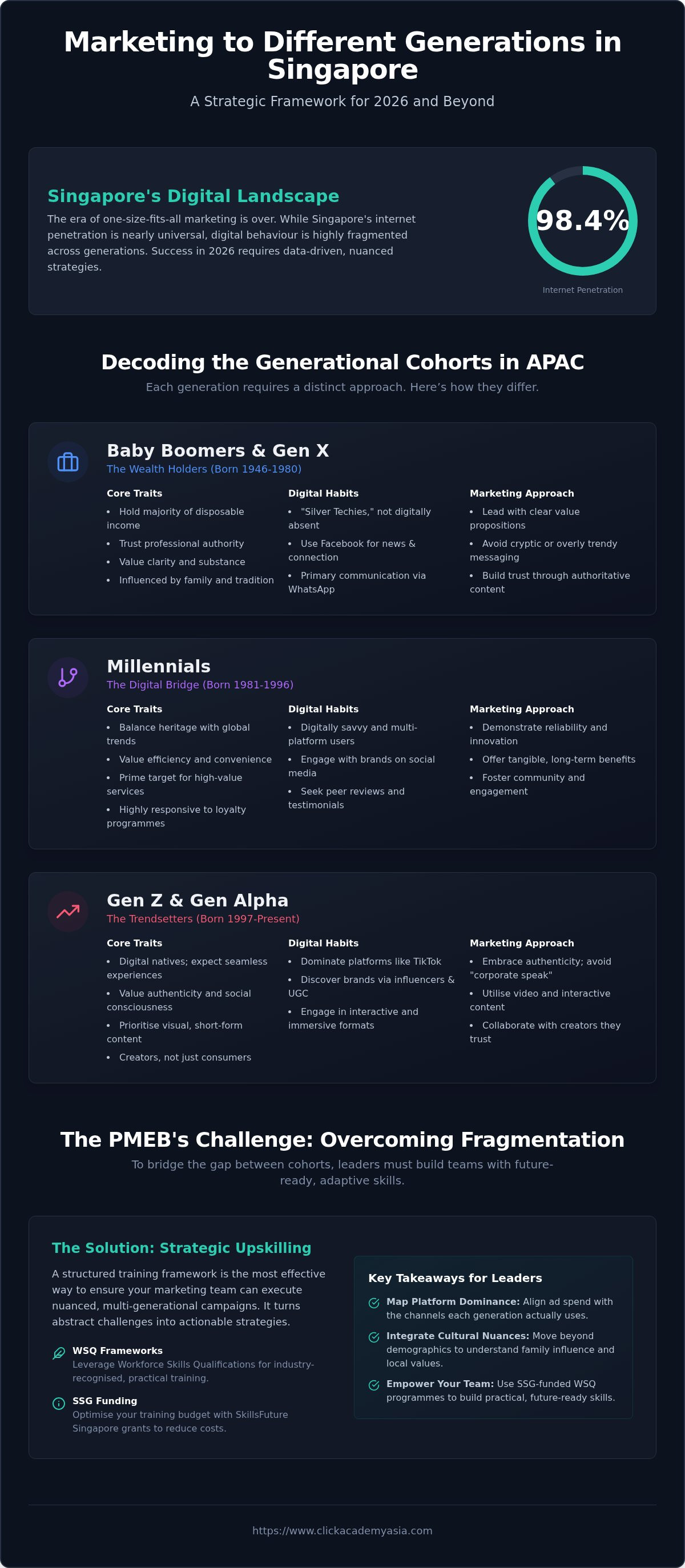
Often dismissed as "non-digital," Asian Baby Boomers (born 1946–1964) are actually "Silver Techies" who use WhatsApp and Facebook as primary news sources. This group, along with Gen X (born 1965–1980), holds the majority of disposable income in Singapore. To build trust, your strategy must lead with professional authority and clear value propositions. Effective marketing to different generations in Asia means not alienating these high-value spenders with overly cryptic or trend-heavy messaging that lacks substance.
Millennials (born 1981–1996) act as the bridge between traditional heritage and digital-first living. They are the first generation to truly balance local cultural values with global digital trends. For PMEBs, this group represents a prime target for high-value services, provided the brand can demonstrate a blend of reliability and innovation. They appreciate efficiency and are highly responsive to loyalty programmes that offer tangible, long-term benefits.
Gen Z and Gen Alpha: The Trendsetters
For those born after 1997, the digital world is their native environment. Asia's Generation Z demands radical brand authenticity and social responsibility. In 2026, "snackable" video content on platforms like TikTok and Instagram Reels is the non-negotiable standard for engagement. These cohorts rely heavily on peer-to-peer social proof rather than traditional celebrity endorsements, often bypassing Google to search for products directly on social apps.
Generation Alpha (born 2013–2024) is already influencing household spending through their parents. They are driving the "woke" consumerism trend in the APAC context, where environmental and social stances can make or break brand loyalty. To reach them, brands must focus on transparency and real-world impact rather than just polished advertising. Mastering these demographic shifts is a core component of the WSQ Digital Marketing Strategy & Planning curriculum, helping PMEBs translate cultural data into high-impact campaigns.
Prioritise short-form video over long-form copy to capture attention.
Leverage User-Generated Content (UGC) to build authentic social proof.
Ensure brand values align with social impact goals to win loyalty.
Use Marketing Analytics & Insights to track cohort-specific conversion paths.
Platform Paradigms: Comparing Social Media Usage by Generation in APAC
In 2026, the average user in Singapore navigates approximately 7.4 different social platforms monthly. This multi-platform habit makes marketing to different generations in Asia a test of strategic agility. While Meta platforms like Facebook and Instagram maintain a massive reach of 3.8 million and 3.35 million users respectively, the intent behind each "scroll" has diverged significantly. PMEBs must now distinguish between the community-driven engagement of Facebook and the discovery-led nature of TikTok to avoid wasting ad spend on mismatched formats.
The rise of "Super Apps" has further complicated the landscape, as these platforms blend commerce, social interaction, and utility into a single interface. For PMEBs, LinkedIn remains the gold standard for building professional authority, particularly among Gen X and Millennial decision-makers who value long-form thought leadership and industry insights. A McKinsey analysis of Gen Z in APAC highlights that these younger users are increasingly using social platforms as their primary search engines, bypassing traditional text-based queries to find visual reviews and peer recommendations.
Visual and Short-Form Video Dominance
Short-form video is no longer a trend; it's the primary language of 2026. Platforms like TikTok and YouTube Shorts have captured the attention of Gen Alpha and Z by prioritising raw, authentic personality over high-production polish. To succeed, brands must adapt their WSQ Content Marketing Strategy to fit the "lo-fi" aesthetic that signals trustworthiness to digital natives. Content that feels like a traditional advertisement is instantly skipped, while educational or "behind-the-scenes" clips that feel human drive significantly higher engagement rates. This shift requires PMEBs to empower their creative teams with the skills to produce agile, algorithm-friendly assets that resonate with the fast-paced consumption habits of APAC's youth.
The Persistence of Traditional Digital Channels
Despite the rise of video, traditional channels like Email and Search (SEO/SEM) remain the backbone of 2026 conversion strategies for Baby Boomers and Gen X. Google Search has evolved into an AI-driven response engine, requiring PMEBs to optimise for conversational intent rather than just isolated keywords. Data shows that while social media is excellent for discovery, search engines remain the top source for brand discovery in Singapore at 52.8%. Balancing these channels requires a sophisticated understanding of marketing to different generations in Asia to ensure a high ROI across the entire customer journey. By integrating WSQ training into your team's development, you can ensure they possess the analytical depth to track these cross-platform conversion paths effectively.
TikTok & Reels: High discovery and brand awareness for Gen Z and Gen Alpha.
Facebook & WhatsApp: Deep community engagement and news consumption for ages 35–54.
LinkedIn: Essential for B2B authority, professional networking, and executive positioning.
Search & Email: High conversion and retention for older, high-net-worth cohorts in Singapore.
Practical Implementation: Building a Multi-Generational Strategy Using WSQ Frameworks
Moving from high-level theory to executable tactics is where many Singapore brands falter. Successfully marketing to different generations in Asia requires a structured approach that respects both legacy values and digital innovation. By adopting WSQ-aligned frameworks, PMEBs can transform fragmented efforts into a cohesive engine for growth that addresses the specific needs of each cohort. This process ensures that your 2026 strategy is built on a foundation of practical mastery rather than guesswork.
The Role of Data and Analytics
Start by auditing your current demographic reach using sophisticated tools to identify exactly who is engaging with your brand. Professionals must move beyond vanity metrics like "likes" to focus on cohort-based ROI and lifetime value. Using GA4 to segment generational traffic patterns in Singapore allows you to see exactly where different age groups drop off in your sales funnel. For a deeper dive into this technical transition, explore our Marketing Analytics with GA4: A Strategic Guide for 2026 Professionals.
Messaging That Resonates
Developing messaging that speaks to Baby Boomer reliability while simultaneously addressing Gen Z ethics is a delicate balancing act. The "Quick Win" here involves implementing A/B testing specifically for generational headlines; what works for a 55-year-old on Facebook will likely fail with a 19-year-old on TikTok. PMEBs should also prioritise inclusive imagery that reflects the multicultural reality of Singapore to build authentic rapport across all age brackets. Connecting with diverse professionals through the Unique Model & Talent Network can help brands source the right talent to achieve this authentic representation. This nuanced approach to marketing to different generations in Asia prevents brand dilution while maximising relevance.
The WSQ Digital Marketing Strategy & Planning programme provides the necessary scaffolding for this implementation. It guides teams through a systematic cycle of testing and iteration based on real-world APAC data. By following this framework, you can ensure your campaigns remain agile and evidence-based:
Audit: Use Marketing Analytics & Insights to identify demographic gaps in your current reach.
Segment: Create tailored messaging paths that maintain your core brand identity while speaking to specific values.
Deploy: Launch cohort-specific campaigns on platforms where each generation spends the most time.
Optimise: Continuously refine your creative assets based on conversion performance across different age groups.
This systematic approach ensures your strategy remains future-proof. If you're ready to lead your team through this transition, consider enrolling in our WSQ-certified digital marketing tracks to master these essential skills and drive tangible results.
Upskilling for 2026: Driving ROI with ClickAcademy Asia’s Strategic Programmes
The complexity of marketing to different generations in Asia requires more than just a surface-level awareness of social media trends. It demands a strategic reset that only structured, professional training can provide. For SingaporeanPMEBs, upskilling isn't merely a career milestone; it's a critical business necessity to ensure marketing spend isn't wasted on misaligned demographics. ClickAcademy Asia bridges this gap by offering WSQ-certified programmes that translate complex 2026 market data into actionable, high-impact strategies. You'll move beyond simply understanding the "Silver Techie" or "Gen Alpha" to actually converting them into loyal customers.
Maximising Your SkillsFuture Credit
Investing in your team's expertise is financially accessible through the Singapore government's robust support system. Eligible organisations can leverage SSG funding, which covers up to 50% of course fees for citizens and Permanent Residents, increasing to 70% for those aged 40 and above under the Mid-Career Enhanced Subsidy. Additionally, the SkillsFuture Enterprise Credit (SFEC) provides a S$10,000 credit to offset out-of-pocket expenses for supported WSQ courses until late 2026. Employers can also claim Absentee Payroll (AP) funding at a rate of S$4.50 per hour to offset salary costs during training. This financial framework allows you to scale your team's capabilities in marketing to different generations in Asia without straining your operational budget. For a comprehensive look at available tracks, see our guide on Mastering the 2026 Landscape: WSQ Digital Marketing Courses in Singapore.
Building a Future-Ready Marketing Team
The transition from a tactical executor to a strategic leader requires a shift in mindset that generic online tutorials cannot facilitate. ClickAcademy Asia’s programmes are designed by industry practitioners who prioritise practical mastery over abstract theory. Our workshops use real-world APAC case studies to ensure your team can immediately apply new insights to your 2026 campaigns. By choosing a partner that is an official Google certification provider, you guarantee that your staff are learning from the best in the region. This commitment to excellence ensures that your brand remains agile in a fragmented digital landscape.
Don't let your brand fall behind as consumer habits continue to evolve. Equip your team with the latest generational marketing skills at ClickAcademy Asia to secure your market position. Whether you're looking to master Marketing Analytics & Insights or refine your WSQ Content Marketing Strategy, our mentors are ready to help you drive measurable ROI. Successfully marketing to different generations in Asia in 2026 depends on your ability to adapt faster than the competition; start your journey toward future-proofing your expertise today by exploring our specialised certification tracks.
Future-Proof Your 2026 Multi-Generational Strategy
Success in 2026 isn't about chasing every platform; it's about mastering the intersection of cultural values and digital habits. You've seen how the "Silver Techies" in Singapore differ from Gen Alpha, and why your messaging must adapt to these distinct intent signals. Successfully marketing to different generations in asia requires a commitment to data-driven precision and a deep understanding of the local ecosystem.
Audit Demographics: Use GA4 to identify high-value cohorts and their specific drop-off points in your sales funnel.
Customise Messaging: Balance legacy values with digital-first ethics to maintain brand relevance across all age brackets.
Leverage Funding: Utilise SSG subsidies to offset upskilling costs for your marketing team.
Now is the time to transition from tactical execution to strategic leadership. Our WSQ-certified training tracks and official Google certification programmes provide the practical mastery your team needs to thrive. [Internal Link: ClickAcademy Asia Sales/Marketing courses] Use your SSG funding to empower your team with WSQ-funded training tracks at ClickAcademy Asia and stay ahead of the curve.
Frequently Asked Questions
How does marketing to different generations in Asia differ from Western markets?
Marketing to different generations in asia differs from Western models due to the deep-rooted nature of collectivism. While Western strategies often target individuals, Asian demographics are heavily influenced by family structures. In Singapore, younger cohorts frequently guide the digital adoption of older relatives, creating a cross-generational influence that brands must account for. This cultural nuance requires a strategy that respects family hierarchies while delivering modern digital experiences.
What are the most effective social media platforms for reaching Baby Boomers in Singapore?
Facebook and WhatsApp remain the most effective channels for reaching the 55+ demographic in Singapore. Unlike younger users who prioritise short-form video discovery, Baby Boomers value clear, authoritative communication and community-driven content. They use these platforms as primary news sources and social hubs. For PMEBs, this means focusing on reliability and long-form value propositions rather than chasing viral trends that may alienate this high-net-worth cohort.
Can I use the same content for Gen Z and Millennials if I change the caption?
Simply changing captions is insufficient because these cohorts have fundamentally different intent signals. Millennials often look for efficiency and tangible rewards, whereas Gen Z prioritises brand ethics and authentic social proof. Effective marketing to different generations in asia requires creating specific visual formats for each group. While a Millennial might engage with a polished product carousel, a Gen Z user will likely prefer raw, user-generated video content.
How do I justify the cost of multi-generational marketing to my CFO?
CFOs respond best to data regarding rising customer acquisition costs and the efficiency of cohort-based ROI. Explain that a fragmented strategy leads to wasted ad spend on platforms where your target audience isn't active. By using GA4 to segment traffic, you can prove how multi-generational strategies improve conversion rates and lifetime value. Frame the cost as a necessary investment in future-proofing your brand's market share in a competitive APAC landscape.
What is the role of SSG funding in professional marketing training?
SSG funding significantly lowers the barrier to entry for professional upskilling in Singapore. It provides substantial subsidies for WSQ-certified courses, covering up to 70% of fees for eligible Singaporeans aged 40 and above. This government support ensures that PMEBs can equip their teams with the latest skills. By utilising these grants, businesses can drive high-impact transformation without a massive capital outlay that strains the 2026 budget.
Which WSQ course is best for learning generational marketing strategy?
The WSQ Digital Marketing Strategy & Planning programme is the most comprehensive track for mastering these nuances. It provides a structured framework for auditing demographics and developing cohort-specific campaigns that resonate across the APAC region. This course is ideal for PMEBs looking to move from tactical execution to strategic leadership. [Internal Link: ClickAcademy Asia Sales/Marketing courses] Other relevant options include WSQ Marketing Analytics & Insights for tracking segmentation success.
How is Gen Alpha influencing household purchasing decisions in Asia?
Gen Alpha influences household spending by acting as the primary advocate for sustainable and ethical brand choices. Parents in Singapore increasingly consult their children on technology purchases and brands that demonstrate a clear social purpose. This generation is driving a shift toward "woke" consumerism, where brand values are just as important as product features. Ignoring their influence can lead to a disconnect with modern family purchasing cycles and brand loyalty.
Is email marketing still effective for younger generations in 2026?
Email remains a vital retention tool for younger generations, provided the content is highly personalised. While they don't use email for discovery, Gen Z and Millennials rely on it for transactional updates and exclusive loyalty rewards. To keep them engaged, move away from generic newsletters toward interactive and visually-led formats. Email provides a direct, owned channel that bypasses the volatility of social media algorithms, making it essential for building long-term brand loyalty.


Comments