
YouTube Advertising for Brand Growth and Targeted Traffic

YouTube advertising for brand growth can build awareness, help people consider your offer and guide interested viewers towards conversion. A well-planned campaign can reach audiences based on demographics, interests, location, viewing behaviour and search intent. The strategy works best when targeting, campaign goals and ad formats all suit the audience.
Choosing a platform is only part of the decision. You also need to define whom you want to reach and what you want them to do next. This guide explains how objectives shape your approach, how in-stream, in-feed and Shorts ads differ, and how audience targeting can attract more relevant traffic. It also covers what to measure so you can make informed adjustments as a campaign develops.
Table of Contents
Why YouTube Advertising for Your Brand?
YouTube advertising can build awareness, support consideration and bring new viewers into your customer journey. Results depend on matching a clear objective with relevant audiences, strong creative and suitable video formats.
For a practical overview of campaign setup and targeting, watch this short tutorial:
Video Creative and ABCD Practices
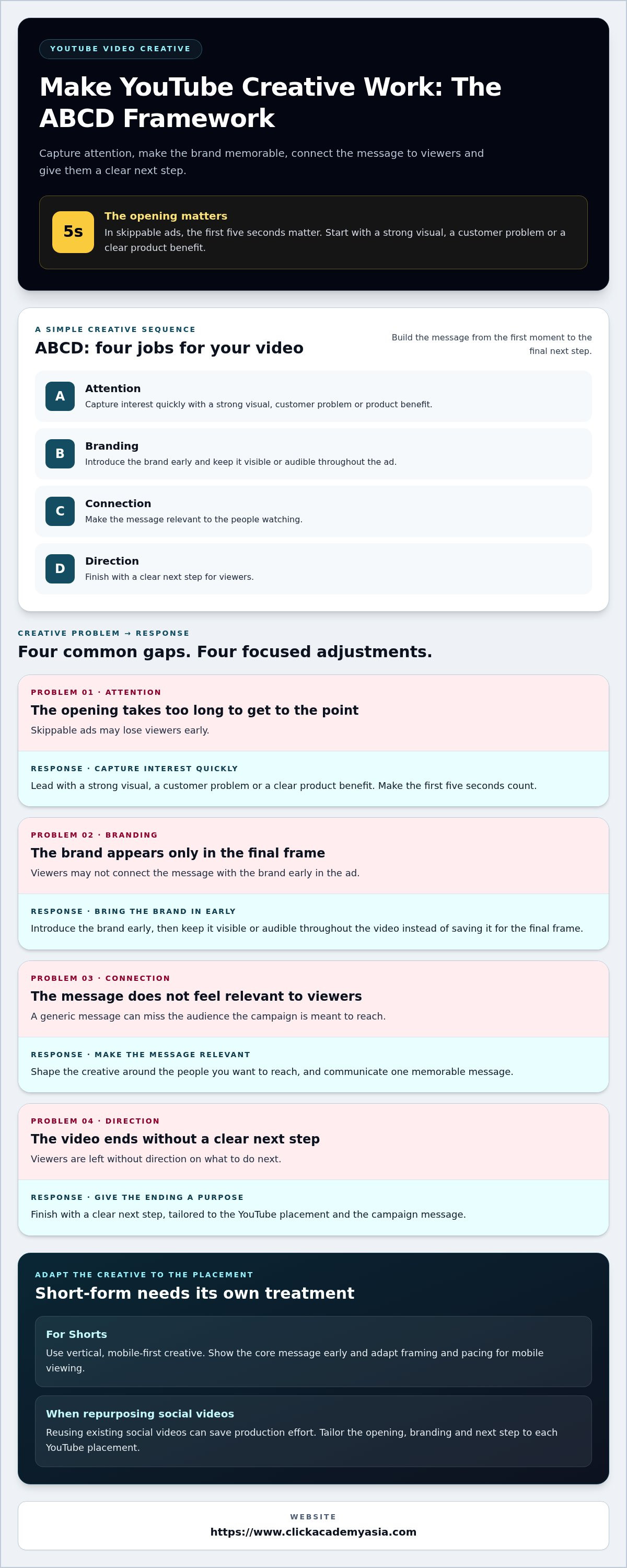
Use Google’s ABCD framework to organise creative around Attention, Branding, Connection and Direction. Capture interest quickly, introduce your brand early, make the message relevant to viewers and finish with a clear next step. The first five seconds matter in skippable ads, so open with a strong visual, a customer problem or a clear product benefit.
Keep your brand visible or audible throughout the ad instead of saving it for the final frame. For short-form creative, show the core message early and adapt the framing and pacing for mobile viewing. Repurposing existing social videos can save production effort, but tailor the opening, branding and call to action to each YouTube placement.
Awareness and Consideration Campaigns
Video Reach Campaigns are designed to extend awareness by showing video ads to a broad or defined audience. Set the audience around the people you want to introduce your brand to, then choose creative that communicates one memorable message. YouTube is the number one platform viewers turn to when researching, vetting or deciding about a brand, product or service.
Video View Campaigns focus on earning views and supporting consideration. They can introduce new customers to an offer with videos that explain its use, value or difference. YouTube advertising for brand growth works best when the campaign objective, audience and creative reinforce one another, rather than treating views as the final business outcome.
Shorts suits vertical, mobile-first creative, while in-stream and in-feed placements fit other viewing contexts. Adapt short-form social assets for Shorts, making sure the opening moments communicate a clear proposition without relying on sound alone.
Benchmarks and Incremental Growth Measurement
Use benchmarks as context, not as a promise for every campaign. Reach also varies with campaign settings and audience size, so compare it with your planned reach and previous activity rather than applying an unrelated target.
Measure views, click-through rate and conversions against the campaign objective. To assess incremental growth, compare outcomes among people exposed to the ads with an appropriate unexposed comparison group where measurement supports it. Brand-lift measurement can help assess changes in awareness or consideration. Interpret results alongside reach and response, not in isolation.
For campaigns in Singapore, follow YouTube’s advertising policies and use its paid-promotion disclosure for creator videos that include paid partnerships. Make the commercial relationship clear to viewers and keep product claims accurate. Skippable ads may lose viewers early, while broad targeting or repetitive creative can reduce relevance. Review audience and creative performance, then adjust the campaign accordingly.
YouTube campaign goals for sales, consideration and awareness
Choose a YouTube campaign goal by identifying the business change you need, not simply the views you want. Awareness, consideration and sales support different stages of discovery, so align each campaign’s message and success measures with its intended outcome.
Awareness and Business Objectives
Brand awareness matters when a business needs more relevant people to recognise its name or understand its offer. YouTube campaigns can support that objective by introducing a brand to potential customers before they actively compare products. Globally, 90% of people use YouTube to explore new brands and products. That makes awareness a practical starting point for a new product launch, a market expansion or an offer that needs clearer recognition.
Translate the business objective into a campaign goal before choosing creative. For example, a Singapore business entering a new category might prioritise awareness among audiences likely to need its offer. A brand with established recognition might focus instead on product consideration or sales. YouTube is the number one platform viewers turn to when researching, vetting or deciding about a brand, product or service, so campaigns can support several stages of that journey.
Keep the goal and measurement connected. If awareness is the priority, assess whether the campaign reached its intended audience and improved recognition. For consideration, look for signs that viewers explored the offer further. For sales, track actions that connect exposure with purchase intent or completed transactions. A campaign can support broader business objectives, but its primary goal should remain clear. Otherwise, teams may judge awareness activity only by immediate sales or mistake high exposure for commercial impact.
Product Discovery and Consideration
Awareness can introduce a product before a viewer knows its name, need or available solution. Use the video to show the problem the product addresses, who it helps and why it deserves attention. A Singapore retailer, for example, could introduce a new product range through a concise demonstration, then use subsequent campaign activity to explain features to interested audiences.
Consideration gives viewers a reason to evaluate the offer. Build on initial discovery with useful details such as product use, benefits or comparisons between options. Keep the message relevant to the audience’s questions. A first-time buyer may need a simple explanation, while a returning viewer may respond to more specific information. This progression connects discovery with informed evaluation, rather than treating a single exposure as a completed journey.
Set a clear next step for each stage. Awareness creative might invite viewers to learn about a category, while consideration messaging can direct them towards product details. Sales-focused campaigns should make the purchase action clear. Review the journey across those goals, then adjust the message when viewers engage with discovery content but do not advance. Teams planning this progression can strengthen their approach through content marketing strategy training.
YouTube's audience reach and engagement
YouTube’s scale gives Singapore businesses access to broad audiences and specific viewer groups. Effective planning balances reach with the relevance and engagement that can support channel growth.
Audience Reach and Channel Growth
YouTube has over 2.5 billion active users and is the world’s second-largest search engine. That scale can help a brand introduce its channel and videos to people beyond its existing followers. But paid reach and channel growth are different outcomes: an ad can reach viewers without prompting them to subscribe or watch more content.
Build a bridge between the ad and the channel. For example, introduce a product in an ad, then direct interested viewers to a related video or a useful playlist. YouTube Shorts receives over 200 billion views daily, offering another format for discovery. Review whether new viewers continue watching, subscribe or explore more videos after exposure.
Audience Targeting Options
Shape the audience using signals such as demographics, interests, location, viewing behaviour and search intent. A Singapore business selling professional services might focus on relevant local audiences and topics connected with the problems its services solve. Choose signals that reflect the intended customer, rather than narrowing the audience around assumptions with little connection to the offer.
Similar-audience targeting can extend reach beyond an existing customer or viewer group by finding people who share relevant characteristics. Start with a meaningful source audience, such as people who have engaged with your videos, then assess whether the expanded audience responds to the campaign. Where possible, compare audience groups using the same creative and objective so targeting decisions rely on comparable results.
Audience Engagement
Reach shows how many people encounter an ad; engagement indicates whether viewers respond. YouTube users spend roughly six hours per week consuming YouTube content, creating opportunities for repeated discovery. Use a clear message and relevant next step, such as watching a product demonstration or exploring a channel playlist.
Track views, click-through rate and conversions alongside channel actions, including subscriptions and visits to more videos. These measures answer different questions: views reflect ad consumption, clicks show response to an invitation, and conversions connect activity with a business outcome. If viewers watch but don’t explore further, strengthen the link between the ad’s promise and its destination. If the audience engages with specific topics, use those signals to inform future videos and targeting.
Shorts, in-stream and in-feed ad formats
YouTube offers formats for different viewing contexts, from vertical Shorts placements to ads around longer videos. Choose based on the audience’s viewing habits, the message and the action you want viewers to take.
Shorts Ads for Mobile Viewing
YouTube Shorts ads are designed for a mobile-first audience and appear within the Shorts viewing experience. Use vertical creative that introduces the product or message quickly, with readable text and a clear visual focus. YouTube Shorts can be up to 3 minutes long, but an ad’s length should suit its purpose and keep the key point easy to grasp.
Adapt a short-form social video for Shorts by adjusting its opening, framing and call to action. For example, a café could turn a menu feature into a brief vertical video, then direct interested viewers to its menu. Don’t assume a video made for another platform will connect unchanged. Review how the crop, captions and pacing work on mobile.
In-Stream Ads Before, During or After Videos
In-stream ads can appear before, during or after YouTube videos. Skippable in-stream ads let viewers skip after five seconds, so show the central benefit early. A product demonstration could open with the problem it solves, then use the remaining video to explain the offer and present a relevant next step.
Non-skippable in-stream ads require viewers to watch the full ad before proceeding to their video. Bumper ads are six-second non-skippable spots, so they suit one concise message rather than a detailed explanation. Match the format to the creative: a short reminder can fit a bumper, while a more involved product story may need a different placement.
In-Feed Ads for Active Discovery
In-feed video ads can appear in YouTube search results, alongside related videos or on the home page. These placements can connect with viewers exploring a topic or choosing what to watch. Use a clear thumbnail and title that accurately reflect the video, such as a product comparison or tutorial, so the promise matches the content.
Choose a format by mapping it to its role. Shorts can introduce a visual idea on mobile; in-stream can deliver a message around video viewing; in-feed can invite exploration. Then check that the landing destination or next video continues the same story. A mismatch between ad and destination can interrupt the viewer journey, even when the format earns attention.
For a broader launch, YouTube Masthead ads offer premium placement at the top of the home page over a 24-hour period. Consider this format when prominent visibility is central to the campaign, then align its message with supporting video ads. Consistent creative across placements helps viewers recognise the same brand as they move between formats.
YouTube advertising and targeted traffic
Targeted traffic means attracting viewers whose interests or intent align with your offer, then guiding them to a relevant destination. YouTube advertising campaigns run through Google Ads, where audience signals and campaign settings help shape who sees each video. For a Singapore business, the practical goal is not simply more visits. It is attracting people who are more likely to explore a product, service or useful next step.
Build an audience around intent
Start with the customer action you want, such as viewing a product page, booking a service or completing a purchase. Then select targeting signals that reflect that action, including demographics, interests, location, viewing behaviour and search intent. A Singapore retailer promoting running shoes, for example, could focus creative on local viewers interested in running and direct them to the relevant product range.
Retargeting can reconnect with people who previously interacted with your website or videos. Match the next message to their earlier action: someone who watched a product demonstration might see an ad highlighting a relevant feature, while someone who visited a product page could receive a clearer prompt to explore the offer. Keep the follow-up consistent with the original interaction so it feels relevant rather than disconnected.
Turn ad views into qualified visits
Align three elements before launch: audience, creative and destination. If the ad promotes a specific service, send viewers to a page explaining that service, not a general homepage. If the video offers a tutorial, make the destination or next action useful to someone seeking that information. This continuity helps viewers understand what to do after watching and gives your team a clearer way to assess traffic quality.
Skippable in-stream ads need an early, direct message because viewers can skip after five seconds. Put the core benefit and intended audience near the opening, then use the rest of the video to explain the offer. A clear call to action should name the next step, such as viewing a product range or reading a service description. Avoid sending every audience to the same destination when their needs differ.
Use click-through rate as one diagnostic, not the sole measure of success. The average YouTube ad click-through rate is around 0.65%, while your campaign’s results depend on its audience, creative and offer. Compare clicks with downstream actions, such as engaged page visits, enquiries or conversions. If traffic arrives but doesn’t progress, review the landing page promise, loading experience and message match before widening the audience.
Check results by audience segment and creative in Google Ads, then shift budget towards combinations that attract relevant actions. Track conversions consistently in Google Analytics (GA4) to connect campaign visits with later outcomes. For teams strengthening campaign planning and measurement, build practical digital advertising skills.
ClickAcademy Asia: WSQ Digital Marketing Strategy & Planning
ClickAcademy Asia helps professionals build the strategic skills to plan digital campaigns around clear business objectives. The WSQ Digital Marketing Strategy & Planning course is a natural next step when your team needs to connect audience insights, channel choices, creative direction and performance measurement.
For focused development, WSQ Content Marketing Strategy can strengthen planning for video messages, while WSQ Search Engine Marketing (SEM) builds paid search knowledge. These skills help marketers make more informed decisions about how YouTube fits within a broader digital plan, rather than treating each campaign as a standalone activity.
Explore the relevant learning options or discuss your team’s development needs by visiting ClickAcademy Asia.
Build Your Next Campaign with Greater Clarity
Strong marketing capability grows when teams can turn new platform features into sound decisions. Develop that judgement across your organisation so campaign planning becomes a shared professional skill, not the responsibility of one specialist.
ClickAcademy Asia offers WSQ Digital Marketing Strategy & Planning and WSQ Content Marketing Strategy. These courses help marketing professionals strengthen their strategic foundation and build skills they can apply in future work. Equip your team with relevant WSQ-funded training that supports its development priorities.
Contact ClickAcademy Asia to explore WSQ-funded training for your team and take a considered next step in developing its capabilities.
Frequently Asked Questions
What is YouTube marketing?
YouTube marketing is the planned use of the platform to build relationships between a brand and its audience. It can include publishing useful channel content, collaborating with creators and running paid campaigns. For example, a software company might publish a practical demonstration, then develop follow-up videos that answer common customer questions. Give each activity a clear role in the customer journey instead of publishing videos without a shared plan.
What YouTube ad formats are available for brand growth, and how do they compare?
Shorts, in-stream and in-feed ads suit different creative and viewing contexts. Before choosing, ask whether your existing video can be adapted effectively, whether the message needs explanation and what viewers should do afterwards. A campaign may use different formats for distinct creative assets, provided each supports the same objective and the destination continues the message consistently.
How much does YouTube advertising cost in Singapore, including typical CPM and CPV rates?
There is no single CPM or CPV rate that applies to every Singapore campaign. CPM charges relate to impressions, while CPV charges relate to qualifying video views; the amount depends on the bidding method, audience competition, campaign settings and creative response. Set a budget that reflects your objective, then monitor actual delivery in Google Ads. Use your campaign results to inform future planning instead of treating a general benchmark as a guaranteed rate.
How do you set up a YouTube brand awareness campaign in Google Ads?
Before building the campaign, confirm that your YouTube channel and Google Ads account are connected and that the video is ready to use. In Google Ads, choose a video campaign suited to awareness, set Singapore as the target market, and define the budget and audience. Prepare the video destination and measurement approach before launch. Review the campaign settings and preview the creative, then use early delivery data to guide refinements.
How should brands target audiences on YouTube in Singapore?
Make the audience definition specific enough to guide both the message and the destination. A brand speaking to Singapore-based decision-makers, for instance, should use examples, terminology and customer needs that fit that professional context. Separate audiences with different motivations into distinct campaign groups, so each can receive a relevant message and be assessed on its own response. This structure helps reveal which audience proposition merits further investment.
What creative best practices improve YouTube ad attention and brand recall?
Use a distinctive brand cue, such as a recognisable colour, sonic element or visual device, consistently across campaign assets. Keep the video focused on one main idea, and make spoken content understandable with captions for viewers watching without sound. Test creative variations by changing one element at a time, such as the opening image or call to action. Comparing versions helps identify which treatment best supports recognition and response.



Comments