
Strategic Digital Marketing for Direct-to-Consumer (D2C) Brands in SINGAPORE

Updated: Jul 8
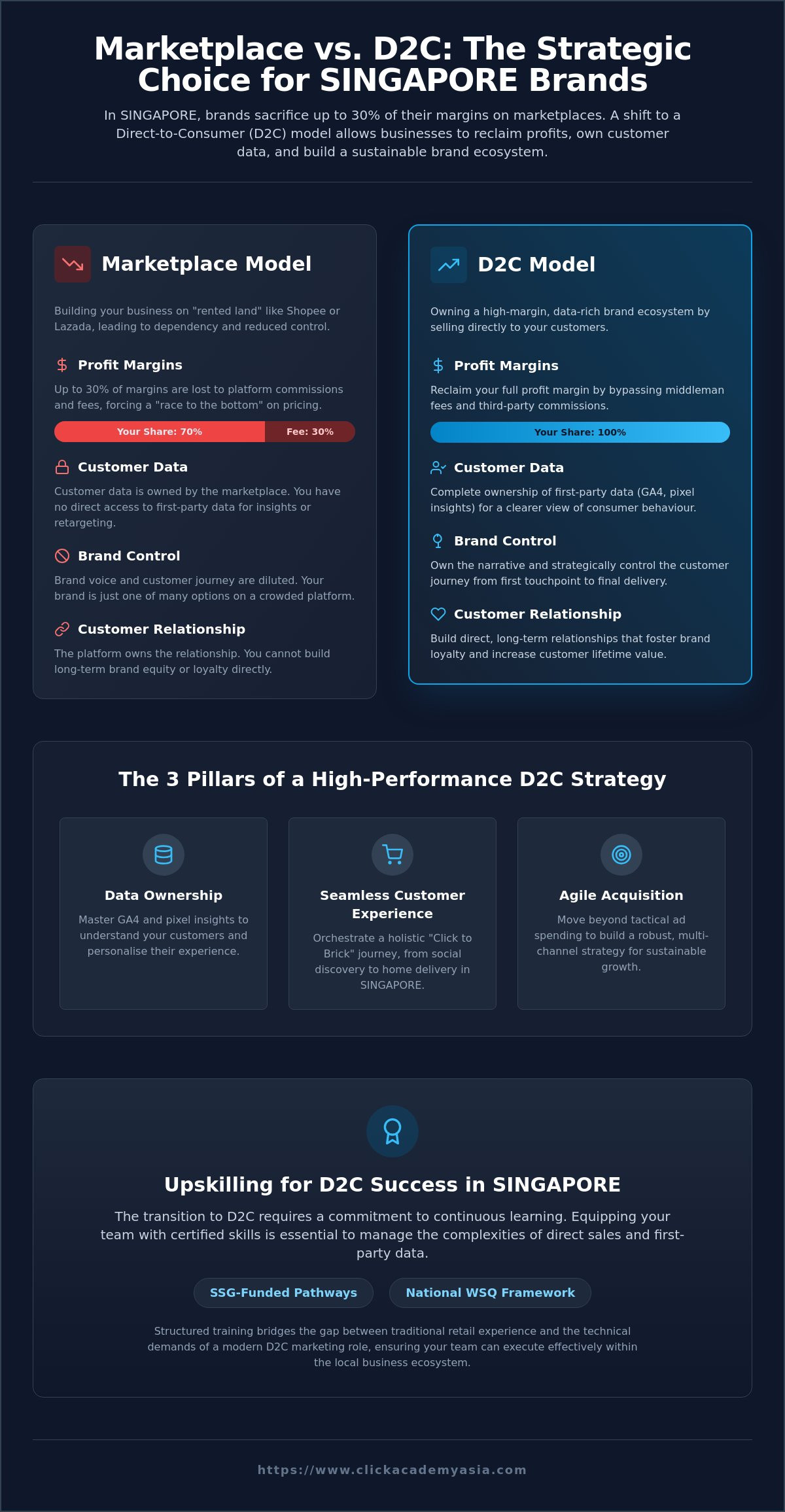
Did you know that despite over 90% smartphone penetration in SINGAPORE, many local brands still sacrifice up to 30% of their margins to marketplace commissions and volatile customer acquisition costs? It’s exhausting to build a business on "rented land" like Shopee or Lazada; you’re working hard but don’t actually own your customer data. This is a challenge many PMEBs face as they struggle to maintain profitability. By choosing the right d2c marketing course, you can transition from being platform-dependent to owning a high-margin, data-rich brand ecosystem.
We recognise that moving away from the safety of established marketplaces requires a significant shift in strategy and technical skill. This guide promises to equip you with the frameworks required to build, scale, and optimise your brand using local SINGAPORE case studies. We’ll preview how to navigate SSG-funded training pathways to ensure your team is certified and ready to execute. You’re about to discover how to reclaim your customer journey and drive sustainable growth through direct sales.
Table of Contents
Defining Digital Marketing for Direct-to-Consumer (D2C) Brands in SINGAPORE
Selling directly to your audience is about more than just setting up a website. It represents a fundamental shift in how the Direct-to-consumer (D2C) business model operates within our local economy. In SINGAPORE, where commercial rent and retail overheads remain high, bypassing third-party wholesalers allows brands to reclaim margins that were previously lost to middleman fees. By 2026, the retail landscape has matured into a digital-first environment where PMEBs must lead with data rather than relying solely on traditional distribution channels. Understanding these shifts is the core focus of any modern d2c marketing course designed for the local market.
This transition replaces middleman-heavy logistics with data-heavy direct relationships. Instead of wondering who is buying your products on a retailer's shelf, you gain a clearer view of consumer behaviour through every digital touchpoint. This clarity is essential for building long-term brand equity across the APAC region, ensuring your business remains agile and responsive to changing trends.
Beyond retail, service providers are also seeing the value in these direct relationships. Global brands like sitmeanssit.com provide an excellent case study in how specialized service businesses can use direct digital channels to manage client relationships and maintain service quality without relying on middleman platforms.
To help you grasp the fundamentals of this model, watch this helpful video:
The D2C Revolution in the SINGAPORE Market
Local brands are leveraging D2C strategies to combat rising operational costs and volatile market conditions. In our compact national market, the "Click to Brick" journey has become a standard expectation. Customers often initiate their discovery on social platforms but demand a seamless transition to either a physical boutique or a reliable home delivery service. D2C marketing is the strategic control of the customer journey from discovery to delivery. This level of control ensures every touchpoint reinforces brand equity rather than diluting it through third-party platforms. Professionals looking to master these local nuances often seek a structured d2c marketing course to bridge the gap between theory and execution.
Why PMEBs are Pivoting to Direct Models
The pivot toward direct models is driven by two critical factors: margin protection and brand voice control. When you sell through a marketplace, you're often forced into a "race to the bottom" on pricing. Selling direct allows you to own the narrative and justify premium positioning. There is, however, a noticeable gap between traditional retail experience and the technical demands of direct sales. This requires a commitment to continuous learning. Upskilling through a certified programme at ClickAcademy Asia ensures your team can manage the complexities of first-party data ownership. Owning your GA4 data and pixel insights is no longer a luxury; it is the primary way to build long-term brand equity in the competitive APAC region.
The 3 Pillars of a High-Performance D2C Marketing Strategy
Transitioning to a direct model requires more than just a functional storefront. It demands a robust framework that supports sustainable growth in the competitive SINGAPORE market. To succeed, PMEBs must move beyond tactical execution and focus on three strategic pillars: data ownership, seamless customer experience, and agile acquisition. Building this foundation is a primary objective of a professional d2c marketing course, where the focus shifts from general awareness to technical mastery. Without these pillars, brands often find themselves stuck in a cycle of high spending with low retention.
The evolution of D2C brands highlights a move toward a "phygital" approach, where the digital and physical worlds blur. In SINGAPORE, this means your online strategy must complement the high-density physical retail environment. A future-ready workforce doesn't just manage ads; they orchestrate a holistic journey that keeps the brand relevant across every touchpoint. This level of strategic alignment is what separates market leaders from those who merely survive on marketplace crumbs.
Mastering First-Party Data and Analytics
Relying on marketplace data is a significant strategic risk. When you sell through third-party platforms, you're essentially blind to the granular behaviours that drive conversions. Owning your GA4 and pixel data allows you to build a comprehensive map of the customer journey. This enables the use of predictive analytics to forecast inventory needs, which is vital for maintaining lean operations in a D2C model. If you want to dive deeper into these technicalities, exploring marketing analytics and insights training can provide the necessary skills to turn raw data into actionable growth strategies.
Search and Social: The D2C Discovery Engine
Discovery in SINGAPORE is heavily driven by visual and intent-based platforms. While SEM is excellent for capturing high-intent shoppers searching for specific solutions, social platforms like TikTok and Instagram serve as the primary discovery engine for new brands. You must balance these channels to ensure a steady flow of new leads while maintaining a low CAC. Effective D2C product descriptions are often informed by advanced keyword research, ensuring your brand appears exactly where your target PMEB audience is looking. This dual approach ensures you're building brand equity while simultaneously driving immediate sales.
To execute this effectively, your team needs to be proficient in agile acquisition. This involves constantly testing and optimising your SEO, SEM, and social media spend based on real-time performance. A structured d2c marketing course provides the environment to test these frameworks using local case studies, ensuring your team is ready to manage the complexities of a modern brand. By focusing on these three pillars, you ensure your business isn't just selling products but is building a resilient, data-driven asset.
D2C vs. Marketplace Models: A Strategic Comparison for SINGAPORE Businesses
Deciding whether to list on Lazada and Shopee or invest in a standalone Shopify or Magento store is a pivotal moment for any local brand. Marketplaces offer an undeniable advantage: immediate access to a massive, ready-to-buy audience. However, for corporate leaders, this is the digital equivalent of building on rented land. You don't own the relationship, the data, or the future of that customer. Transitioning to a direct model allows you to move from a transactional relationship to a strategic asset. Mastering this transition is a core module in a professional d2c marketing course, where PMEBs learn to balance reach with long-term brand equity.
The cost-benefit analysis is stark. Marketplace commissions, payment fees, and mandatory participation in "mega-sale" events can quickly erode margins. In contrast, D2C marketing spend is a direct investment in your own ecosystem. While you must pay to acquire traffic, every dollar spent on SEO or social ads builds your own pixel data and email lists. Within Singapore's D2C Ecosystem, brands that own their journey are better positioned to weather the volatility of third-party platform changes.
The Hybrid Approach: Using Marketplaces as Top-of-Funnel
Smart PMEBs don't just abandon marketplaces; they use them as a discovery engine. The goal is to use the massive reach of Shopee or Lazada for the first purchase and then migrate those buyers to your D2C platform. You can achieve this through loyalty incentives, exclusive product launches, or "direct-only" bundles included in the physical packaging. This hybrid strategy requires tight multi-channel inventory management and consistent brand messaging across all touchpoints. It ensures you capture the "rented" traffic but convert it into an "owned" audience over time.
Ownership of the Customer Lifetime Value (CLV)
Ownership is where the real profit lies. D2C brands in SINGAPORE often report a 20-30% higher CLV because they can engage customers directly via personalised email and SMS marketing. This direct line of communication bypasses the noise of a crowded marketplace and fosters genuine community building. Managing these complex CRM systems and automated flows requires a specialised skill set. This is why having WSQ-certified staff is essential; they possess the validated competencies to execute these advanced retention strategies. By reducing your reliance on paid acquisition through organic SEO and community engagement, you create a sustainable growth engine—exemplified by Photobook Press and its focus on high-quality custom printing—that marketplace-only brands simply cannot match.
Upskilling for D2C Success: Navigating WSQ and SSG Frameworks
Building a sustainable D2C brand is a complex technical challenge that requires more than just enthusiasm. It requires a workforce with validated competencies that can handle everything from data privacy to conversion rate optimisation. The WSQ framework serves as the national standard for certifying these skills in SINGAPORE. By aligning your team's development with this framework, you ensure they aren't just learning theory but are mastering practical execution. This structured approach is what makes a professional d2c marketing course a high-ROI investment for any local business looking to scale.
Leveraging SSG funding makes this digital transformation accessible for local companies and PMEBs. SINGAPORE citizens and Permanent Residents can receive up to 70% baseline funding for eligible modules, while those aged 40 and above can receive up to 90% funding through the Mid-Career Enhanced Subsidy (MCES). This significant financial support allows businesses to upskill their entire marketing department without straining operational budgets. ClickAcademy Asia stands as a premier partner in this journey, offering government-subsidised education that bridges the gap between digital potential and commercial reality.
The ROI of corporate group training extends beyond individual skill acquisition. When an entire team undergoes D2C training together, they develop a shared language and a unified strategic vision. This alignment is crucial for managing the cross-functional demands of a direct-to-consumer model, where marketing, sales, and operations must work in perfect sync. Investing in these certified pathways ensures your organisation remains resilient against market shifts while maintaining a competitive edge in the APAC region.
Maximising SkillsFuture Credit for D2C Mastery
To identify SSG-approved programmes, start by searching the MySkillsFuture portal for courses aligned with the WSQ Skills Framework. These stackable certifications allow for clear career progression and ensure that every hour spent in the classroom contributes to a recognised qualification. SINGAPORE citizens and PRs can receive up to 70-90% funding for eligible modules, and individuals can further offset costs using their SkillsFuture Credit. This makes it possible to master complex topics like GA4 analytics or digital advertising through a series of manageable, high-impact learning sessions.
Building a Future-Ready D2C Team
HR managers should use the WSQ framework to audit current capabilities and identify specific gaps in areas like search engine marketing or content strategy. Intensive bootcamps often provide better value than theoretical degrees because they focus on immediate application and real-world SINGAPORE case studies. You can create a training roadmap for your D2C pivot today by mapping out the essential skills your team needs to own the customer journey from end to end. This proactive approach ensures your brand is led by practitioners who understand the nuances of the local retail ecosystem.
Ready to future-proof your organisation? Explore our WSQ-funded digital marketing training tracks to equip your team with cutting-edge skills today.
Mastering the D2C Landscape with ClickAcademy Asia
ClickAcademy Asia acts as a strategic advisor for brands looking to move beyond the limitations of third-party platforms. We don't just teach digital tactics; we empower PMEBs to execute complex business models that prioritise long-term growth. By enrolling in a professional d2c marketing course through our academy, you're investing in a curriculum shaped by industry leaders who have successfully scaled brands within the APAC region. This transition from being a marketplace seller to a brand owner requires a fundamental shift in mindset, and we provide the roadmap to make that change permanent.
Our commitment to excellence is reflected in our comprehensive suite of WSQ-certified modules. Whether your team needs to master WSQ Search Engine Optimisation (SEO), WSQ Search Engine Marketing (SEM), or WSQ Marketing Analytics & Insights, our programmes are designed for immediate application. We've seen how organisations thrive when they move from fragmented efforts to a unified, data-driven strategy. This ensures that every hour spent in training translates directly into higher profit margins and complete ownership of the customer journey.
Practical Mastery Over Theoretical Learning
Our workshops are built around real-world SINGAPORE business cases, allowing you to pressure-test strategies before deploying them in the market. We leverage our official partnerships with major global platforms and certifying bodies to provide insights you won't find in a traditional textbook. This focus on practical application is why corporate leaders trust us to future-proof their workforce. We encourage you to explore our digital marketing and sales training to see how our practitioner-led approach can transform your brand's performance in the 2026 retail environment.
Next Steps for Your D2C Journey
Taking the first step toward D2C excellence involves a clear assessment of your current team's capabilities. We recommend starting with a skills audit to identify which WSQ frameworks will offer the most immediate impact for your organisation. You should also check your eligibility for SSG funding via our portal to maximise your training budget. Remember, SINGAPORE citizens and PRs can receive significant subsidies, making this the most cost-effective time to upskill.
For larger organisations, we offer customised corporate training sessions designed for your specific cohort. This ensures that your entire team is aligned on the same frameworks required to dominate the 2026 D2C market. Equip your team with the technical mastery needed to reclaim your margins, own your data, and build a resilient brand. The future of retail is direct, and the best time to prepare is now.
Summary of Actionable Points:
Audit Current Skills: Use WSQ frameworks to identify gaps in your team's SEO, SEM, and analytics capabilities.
Maximise Funding: Utilise SSG subsidies and SkillsFuture Credits to offset up to 70-90% of training costs.
Own Your Data: Transition from marketplace reliance to a first-party data model using GA4 and CRM systems.
Master the Frameworks: Enrol in a professional d2c marketing course to ensure your strategy is grounded in local SINGAPORE case studies.
Call to Action: Equip your team with cutting-edge skills by exploring our WSQ-funded training tracks at ClickAcademy Asia. Start your journey toward D2C excellence today.
Lead Your Brand's Digital Transformation Today
Reclaiming your margins and owning your customer data isn't just a strategic choice; it's a necessity for long-term survival in SINGAPORE. By integrating the three pillars of D2C excellence, you move away from marketplace dependency and build a resilient, data-rich asset. Mastering these frameworks through a professional d2c marketing course ensures your team possesses the validated skills to navigate the complexities of direct sales, search engine optimisation, and customer retention. This transition allows you to turn transactional shoppers into a loyal community that drives sustainable growth.
As a premier SINGAPORE training provider since 2011, ClickAcademy Asia is dedicated to your professional growth. Our WSQ-certified and SSG-funded programmes, backed by official Google and platform partnerships, provide the practical mastery required to dominate the 2026 market. We've helped thousands of PMEBs advance their careers and organisations through results-driven education. Don't let your brand's future be dictated by third-party algorithms. Equip your team with WSQ-funded D2C marketing skills at ClickAcademy Asia and start building your legacy today. You have the tools and the support; now it's time to lead with confidence.
Frequently Asked Questions
What is the best digital marketing strategy for a new D2C brand in SINGAPORE?
The most effective strategy involves a "phygital" approach that balances social discovery with search intent. You should use Instagram and TikTok for brand building while employing SEM to capture active buyers. This ensures you aren't just waiting for traffic but are actively directing it to your owned platform. Focusing on these high-intent channels allows you to build a database of first-party data from your very first sale.
How can I use SSG funding for a D2C marketing course?
You can access SSG funding by enrolling in programmes with certified providers like ClickAcademy Asia. SINGAPORE Citizens and PRs are eligible for subsidies ranging from 70% to 90% of the course fee. The training provider typically handles the claim process, meaning you only pay the net fee after the subsidy is applied. This makes professional upskilling highly accessible for both individuals and corporate teams.
Is a D2C marketing course suitable for small business owners in SINGAPORE?
These courses are essential for small business owners who need to protect their profit margins. Learning how to build a direct relationship with your audience prevents you from being squeezed by marketplace fees and commissions. A d2c marketing course provides the technical "how-to" for managing your own e-commerce ecosystem effectively. It empowers you to compete with larger entities by being more agile and data-driven.
What is the difference between WSQ marketing courses and private certifications?
WSQ courses are aligned with national competency standards and are recognised by employers across SINGAPORE. Private certifications often focus on a single tool or platform without broader strategic context. WSQ provides a validated, strategic foundation that is essential for PMEBs looking to lead digital transformation projects. Because they're government-backed, they also come with significant funding support that private certifications often lack.
Can I manage a D2C brand while still selling on marketplaces like Shopee?
Yes, a hybrid model is often the most effective way to scale in the local market. Marketplaces provide the initial reach and top-of-funnel discovery, while your D2C site focuses on retention and higher CLV. You should use "marketplace-only" buyers as a lead generation source to grow your own database. This allows you to benefit from platform traffic while building a resilient, owned asset.
How much can I save on training costs using SkillsFuture credits in 2026?
You can save a substantial amount by combining SSG subsidies with your personal SkillsFuture Credits. SINGAPORE Citizens aged 40 and above can utilise the S$4,000 credit top-up from the Level-Up Programme initiated in 2024. This often results in minimal out-of-pocket costs for a high-value d2c marketing course. It's an efficient way to future-proof your skills without a heavy financial burden.
What are the core modules included in a WSQ Digital Marketing Strategy programme?
Core modules usually cover Digital Marketing Strategy & Planning, Search Engine Optimisation (SEO), and Marketing Analytics. These programmes ensure you can plan, execute, and measure every stage of the customer journey from discovery to delivery. You'll also master Content Marketing Strategy to keep your audience engaged. This 360-degree view is vital for anyone managing a brand's digital presence in a competitive market.
How does owning first-party data improve my D2C brand's valuation?
Owning first-party data transforms your brand from a simple shop into a strategic data-driven enterprise. Investors prioritise brands that aren't vulnerable to sudden platform changes or rising customer acquisition costs. Showing a direct, repeatable relationship with your customers significantly increases your business's long-term valuation. It proves you have a sustainable model that doesn't rely on third-party wholesalers or marketplaces to survive.



Comments