
How to Choose a Customer Loyalty Program That Fits Your Business

A discount alone will not make customers loyal. Building a customer loyalty program from scratch starts with a clear reason to reward repeat business, then matching benefits and mechanics to what customers value and your business can sustain. A strong design also makes participation simple across the digital touchpoints customers already use.
It is easy to focus on points or sign-up perks, but a programme works only when its value feels worthwhile, its rules are easy to understand and the experience fits how people buy from you. For Singapore businesses, building a customer loyalty program from scratch means starting with your own customer journey, not copying a format from another market. The goal is to encourage repeat behaviour you can measure, not to give away value indiscriminately.
This guide explains what a customer loyalty programme is and how to choose benefits, mechanics such as points or tiers, and digital features that create a useful member experience. You will learn to build a customer loyalty program from scratch around customer behaviour and business goals, with a clear way to improve it over time.
Table of Contents
What is a customer loyalty program?
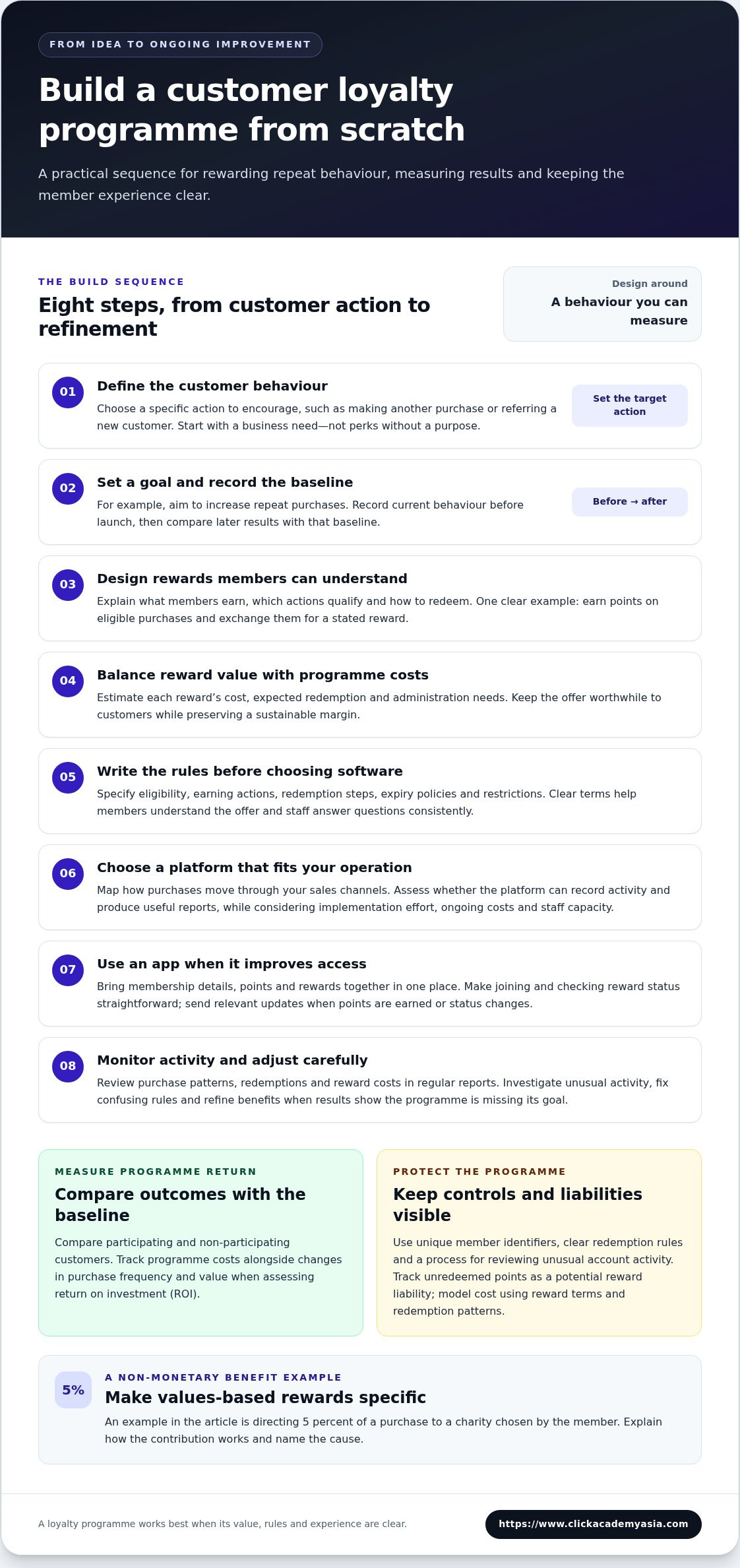
A customer loyalty programme rewards repeat purchases or other valuable customer actions. To build one from scratch, define the behaviour you want to encourage, set measurable goals, choose rewards and mechanics, select a platform, then test and refine the experience.
Set a goal, such as increasing repeat purchases, and compare participating with non-participating customers. Track programme costs alongside changes in purchase frequency and value to assess return on investment (ROI).
Choose loyalty software for the tasks your team needs: recording purchases, managing points, sending status updates and producing a report. In Singapore, assess platform fit against your sales channels, data workflows, staff capacity and customer experience.
Reduce fraud risk with unique member identifiers, clear redemption rules and a process for reviewing unusual account activity. Track unredeemed points as a potential reward liability, and model the cost using your reward terms and redemption patterns.
Define the customer behaviour. Choose a specific action, such as making another purchase or referring a new customer. A focused goal helps you design rewards around a business need instead of adding perks without a purpose.
Set the programme goal and baseline. Record current repeat-purchase behaviour before launch. Compare later results with that baseline, and include platform, staffing and reward costs when calculating ROI.
Design rewards customers can understand. Explain what members earn, how they redeem it and which actions qualify. A simple example is earning points on eligible purchases and exchanging them for a stated reward.
Balance reward value with programme costs. Estimate the cost of each reward, expected redemption and the resources needed to administer the programme. Keep the structure attractive to customers while preserving a sustainable margin.
Write the rules before choosing software. Specify eligibility, earning actions, redemption steps, expiry policies and restrictions. Clear terms help customers understand the offer and give staff a consistent way to resolve questions.
Choose a platform that fits your operation. Map how purchases move through your sales channels, then assess whether the software can record activity and support a useful report. Consider implementation effort, ongoing platform costs and the team responsible for updates.
Use an app when it improves access. A digital app can bring membership details, points and rewards into one place. Make joining and checking reward status straightforward, and send relevant updates when points are earned or a member’s status changes.
Monitor activity and adjust carefully. Review purchase patterns, redemption and reward costs in regular reports. Investigate unusual activity, correct confusing rules and refine benefits when customer actions show that the programme is missing its goal.
Making program benefits simple and valuable
Choose benefits that members can explain easily and link to actions your business values. A successful rewards programme gives customers a clear reason to participate while helping you understand which offers influence their choices.
Explain how the programme uses member information at sign-up. Tell customers what information is used and how they can manage communications, so they can make an informed decision about participating.
Use Customer Data for Business BenefitsGroup purchase records by useful patterns, such as product category, purchase frequency or preferred channel. Use these insights to shape relevant rewards, identify which offers encourage a return visit and report how member actions connect with business outcomes.Keep data collection focused on the programme’s purpose. Explain how information supports member benefits, and avoid using it for unrelated messages customers would not expect.
Offer Values-Based Non-Monetary BenefitsAdd a benefit that reflects what your customers care about, such as directing 5 percent of a purchase to a charity chosen by the member. This mission-based reward gives participation meaning without relying solely on discounts.Explain how the contribution works and name the cause that receives it. Avoid vague promises or values-based messaging that does not match your business’s actions, as a mismatch can weaken trust in your brand.
Make Each Benefit Easy to UnderstandWrite each offer as a short instruction: what members do, what they receive and how they claim it. Name the qualifying purchase and show the reward beside it, rather than hiding conditions across several screens or messages.Review each offer from a member’s perspective across every channel. If customers need staff to explain basic eligibility, simplify the wording or remove an unnecessary condition.
Test Value Before ExpandingCompare member responses to different benefits, such as early access, tailored recommendations or charitable contributions. Use redemption and repeat-purchase patterns to decide which benefits are worth continued investment.Keep a record of reward costs alongside participation and sales outcomes. Teams strengthening their audience insight can apply ideas from WSQ Content Marketing Strategy to make programme benefits clearer and more relevant.
Value loyalty programs direct donations to causes, not customer benefits; purchase patterns show incentives. A 5% discount for hundreds of dollars in spending is insufficient value; 25% of customers are willing to boycott misaligned companies.
Loyalty programs for businesses of different sizes
Choose a programme that fits your customer volume, purchase patterns and team capacity. Invite customers to enrol at checkout, on receipts and through your existing digital channels, then explain the first reward clearly.
For Singapore examples, picture a neighbourhood café rewarding repeat visits, a salon recognising regular bookings, or an online retailer offering referrals. These are adaptable programme models, not claims about named local businesses.
Start with a manageable version. A small business can begin with a digital punch card or a simple reward after repeat purchases. A café, for example, might reward a return visit rather than introduce several membership levels. Keep the rules easy for staff to explain and members to remember, then add complexity only when customer behaviour supports it.
Match programme scale to the business. A business with one outlet may need a straightforward sign-up and redemption process. A retailer serving customers across several channels may need consistent member recognition online and in-store. Map the customer journey first, then decide which tasks staff can manage and which require software or automation.
Separate repeat business from acquisition. Repeat rewards encourage existing customers to return, while referral rewards give members a reason to introduce someone new. Set a distinct purpose for each mechanic. For example, a service business could recognise repeat bookings and offer a separate referral benefit, then track each action independently.
Make enrolment part of the customer experience. Ask customers to join at a natural moment, such as checkout or after completing a booking. Use a short explanation of the benefit and a clear next step. Promote the programme through receipts, email and social channels, keeping the message consistent wherever your audience interacts with the brand.
Use referrals to reach new audiences. Give members a simple way to share an invitation, and make the recipient’s next action clear. Merkle’s 2024 Loyal Barometer Report found that 77% of consumers belong to up to five loyalty programmes. A distinct offer and easy redemption can help your programme earn attention among competing choices.
Review participation before expanding. Track sign-ups, repeat purchases, redemptions and referrals separately. If members join but don’t redeem, review the reward’s usefulness or the steps required. If referrals bring new customers but few return, build a follow-up reason to purchase again. Use these patterns to refine the programme before adding more features.
Keep the experience relevant as you grow. A small business may rely on direct staff conversations, while a larger operation can use customer segments to tailor messages. In either case, let audience behaviour guide changes. For instance, highlight a popular category or simplify a reward that customers rarely redeem.
Choosing points, tiers, discounts, or other mechanics
Choose mechanics that fit the behaviour you want to encourage and the way customers buy. Before settling on a structure, compare how each option affects participation, reward costs and the effort required to manage it.
Use points when progress is easy to explain. Customers earn points through spending and redeem them later. This approach can suit businesses where customers make regular purchases and can see a clear connection between activity and rewards. Show how points are earned and what they can be exchanged for, so members can judge the value before they participate.
Use tiers to recognise different levels of engagement. Tier programmes provide different benefits based on member rank, which can be linked to spending thresholds. Give each level a distinct purpose and explain how members progress. If the next tier feels out of reach or its benefits seem unclear, customers may not see a reason to engage further.
Assess paid membership against immediate value. Paid loyalty programmes provide benefits after members pay a fee. Consider whether customers can use those benefits regularly and whether the offer is easy to compare with their usual buying pattern. Describe the membership terms plainly, including what it provides and when the benefits apply.
Set discount rules around a business objective. Discounts can encourage a particular action, such as trying a new category or returning after a first purchase. Define who qualifies, which products or services apply and how redemption works. Then review whether the offer supports the intended behaviour, rather than simply reducing the price of purchases customers would already make.
Make progress feel visible. A punch card or milestone reward can show customers how close they are to receiving a benefit. For example, a service business might recognise a completed booking with progress towards a future perk. Make each step clear, and avoid a long or confusing path that gives members little sense of advancement.
Use game mechanics with a clear purpose. Challenges, badges or progress markers can make participation more interactive. Tie each mechanic to a meaningful action, such as exploring a new product category, rather than adding a game that distracts from the customer experience. Check that the feature is simple for staff to explain and members to complete.
Make expiry terms visible and practical. State any reward expiry conditions when members earn the benefit and when they view redemption options. Consider whether the timing gives customers a realistic opportunity to use the reward. Clear reminders can help members act before expiry and reduce frustration caused by overlooked terms.
Test one mechanic before combining options. Launch with a focused structure, then review participation, redemption and operational effort. If customers understand the offer but rarely use it, revisit the reward or the steps required to claim it. Add a dedicated challenge or another mechanic only when member behaviour shows a clear reason to do so.
Digital loyalty program features
Digital features should make joining, earning and redeeming rewards straightforward. Design each feature around a real customer action, such as checking points before another purchase or receiving a relevant offer after browsing.
Make registration quick and clear. Let customers enter the details needed to join, then issue a unique identifier, such as a membership number or digital card. Show the sign-up benefit before asking customers to complete the form. A shorter, well-explained process can reduce friction at checkout.
Give members an easy way to access rewards. An app or mobile-friendly account can display points, reward status and redemption options in one place. For example, a member could check available rewards while browsing your online store. Keep essential information accessible without requiring customers to search through old messages.
Send useful status updates. Notify members when points are earned, a reward becomes available or their status changes. A message confirming points after a purchase gives customers a clear record of progress. Set each update around a meaningful action, and avoid sending repeated alerts that add no new information.
Personalise offers using relevant behaviour. Use purchase history to distinguish a customer who regularly buys one category from someone exploring another. Then tailor a message or reward to that pattern. Keep personalisation useful, not intrusive, and make sure the offer relates to an action the consumer can take.
Connect the programme across channels. Let members earn and redeem through the channels where they shop, such as a physical outlet and an online store. A customer who signs up in person should still be recognised online. Consistent account information helps prevent confusion when purchases happen in different places.
Build feedback into the experience. Ask members a focused question after redemption, such as whether the reward was easy to claim. Pair that feedback with programme activity to identify friction. If customers repeatedly abandon a redemption screen, simplify the steps or clarify the instructions before adding more features.
Use reports to guide marketing decisions. Review sign-ups, active members, redemptions and repeat purchases in a regular report. Compare results across channels to see where customers engage and which offers prompt action. Use those findings to adjust the programme rather than relying on clicks alone.
Test the full member journey before launch. Complete a test purchase, check that points appear, then redeem a reward and review the confirmation message. This simple sequence can expose gaps between the app, checkout and member account. Teams strengthening their digital measurement skills can explore digital marketing analytics training to make better use of programme data.
ClickAcademy Asia: WSQ Digital Marketing Strategy & Planning
ClickAcademy Asia’s WSQ Digital Marketing Strategy & Planning course can help you connect loyalty initiatives with broader marketing objectives. Turn programme insights into a clearer strategy by defining your audience, aligning channels and choosing which outcomes to measure. It is a useful next step when your team wants to move from a rewards concept to a structured marketing plan.
Bring your loyalty programme goals and customer journey into the planning process. Use them to identify where digital marketing can support engagement, repeat purchases and more relevant communication. The course is also useful for teams assessing how their marketing activities contribute to business priorities.
To explore the course or discuss your learning needs, visit ClickAcademy Asia.
Turn loyalty strategy into a lasting capability
Building a customer loyalty program from scratch can start a broader shift towards using customer insight to guide marketing decisions. Keep developing that capability as your business and customer expectations change, so your team can assess new opportunities with confidence.
ClickAcademy Asia offers WSQ Digital Marketing Strategy & Planning, WSQ Content Marketing Strategy and WSQ Search Engine Optimization (SEO). These courses help professionals strengthen the strategic and practical skills they use in customer engagement and digital marketing.
Contact ClickAcademy Asia to get started, and take your next step towards building your team’s marketing capability.
Frequently Asked Questions
What is a loyalty feature?
A loyalty feature is a specific function that supports the member experience, rather than the whole programme. For example, a purchase history screen can help customers find a receipt or understand a points adjustment after a returned item. Prioritise features that reduce common support requests or prevent confusion. A useful test is whether a feature lets members complete a task without staff assistance.
What makes a good rewards program?
A good rewards programme works reliably when customers use it. Test real scenarios before launch, including a returned purchase, a missed reward and a member using different payment methods. Make sure staff know how to resolve each case and explain the outcome clearly to customers. These operational checks help protect trust when something does not go to plan.
Which loyalty program types work best for different businesses?
Consider your purchase cycle and margins before choosing a programme structure. A grocery business with frequent, smaller purchases has different economics from a furniture retailer with occasional, higher-value transactions. A booking-based service should also account for the time between appointments. Map a typical customer journey, then choose mechanics that fit its pace and avoid rewarding activity at the expense of the margin needed to serve customers well.
How should a business choose rewards and set point values?
Use a simple unit-economics model before publishing point values. Divide the expected cost of fulfilling a reward by the points needed to redeem it, then compare that cost with the purchases required to earn those points. Include delivery, handling or staff time where relevant. Test the calculation against different purchase patterns to ensure the reward remains financially workable for both occasional and frequent members.
What is the cost of launching and running a customer loyalty program in Singapore?
In Singapore, separate initial launch expenses from ongoing operating costs when preparing a budget. Launch costs may include configuration, integration and staff training; recurring costs can include software, support, communications and reward fulfilment. Also account for internal time spent resolving member queries and reconciling transactions. Compare vendor pricing models and contract terms against your expected programme needs, then review actual expenditure after launch.
Examples of successful customer loyalty programs in Singapore
A café could reward return visits, a salon could recognise regular bookings, and an online retailer could offer referral rewards. These are adaptable programme models.



Comments