
Technical SEO for JavaScript-Heavy Sites: A 2026 Strategic Guide for SINGAPORE Professionals
- ClickAcademy Asia

- 59 minutes ago
- 12 min read
What if the sleek, interactive JavaScript framework your team spent months building is actually invisible to the world’s most important search engine? It is a common nightmare for many PMEBs in SINGAPORE who find their dynamic content missing from search results despite significant investment in modern web technologies. Mastering technical seo for javascript-heavy sites is no longer just a developer's task; it is a strategic necessity for any marketing leader looking to protect their digital ROI and maintain a competitive edge.
You likely agree that the confusion over technical terms like 'hydration' or 'DOM' often leads to a frustrating disconnect between your strategic goals and your technical team's output. This guide promises to bridge that gap by providing you with a clear, actionable framework to audit your site and ensure every page is fully indexable. We will explore the latest 2026 rendering trends and show you how to align your technical expertise with WSQ standards to future-proof your career and lead digital marketing programmes across the APAC region.
Table of Contents
The JavaScript Paradox: Why SINGAPORE Brands Struggle with Search Visibility
The Three Pillars of JavaScript SEO: Crawling, Rendering, and Indexing
Comparing Rendering Strategies: SSR, CSR, and the Rise of Hybrid Frameworks
A Step-by-Step Audit Framework for JavaScript-Heavy Websites
Upskilling for the Future: Integrating Technical SEO into Your WSQ Training Path
The JavaScript Paradox: Why SINGAPORE Brands Struggle with Search Visibility
JavaScript SEO is the critical discipline of ensuring search engines can discover, crawl, and render the dynamic content on your website. For many SINGAPORE brands, the promise of a sleek, app-like experience often comes at a steep price: invisibility. If you don't prioritise technical seo for javascript-heavy sites, your stunning interactive features might look like a blank screen to Googlebot. This disconnect is the core of the JavaScript paradox.
Local companies are rapidly adopting frameworks like React, Angular, and Vue to meet the high expectations of the APAC digital consumer. These tools allow for seamless transitions and faster interactions. However, without a solid technical strategy, these benefits are undermined by technical debt that hides your most valuable content from potential customers. Failing to address these hurdles puts your brand at a significant disadvantage in the competitive APAC region, where agile competitors are already optimising their stacks for maximum visibility.
To better understand how Google handles these sites, watch this helpful video:
The Rise of Single Page Applications (SPAs) in SINGAPORE
Many modern SINGAPORE websites function as a Single-page application (SPA), which means they update content on the page without requiring a full reload. This shift from static HTML to dynamic, client-side rendered environments creates a major friction point. Marketing teams focus on content and conversions, while web developers prioritise performance and code efficiency. If these two groups don't speak the same language, the site's search visibility usually suffers. This tension often leads to content being live for users but functionally non-existent for crawlers because the initial HTML is essentially empty.
The Cost of Poor JavaScript Implementation
Poor implementation isn't just a coding error; it's a budget drain. Rendering delays directly hurt your Core Web Vitals, which Google uses to determine your ranking. Additionally, every second Googlebot spends trying to execute complex scripts is a second it isn't crawling your other pages. This wasted 'crawl budget' means your new products or articles might take days or weeks to appear in search results. Investing in technical seo for javascript-heavy sites is the only way to ensure your crawl budget is spent on discovery rather than debugging. For a PMEB managing a digital storefront, the financial impact of unindexed dynamic content can manifest as thousands of dollars in lost organic revenue every month.
The Three Pillars of JavaScript SEO: Crawling, Rendering, and Indexing
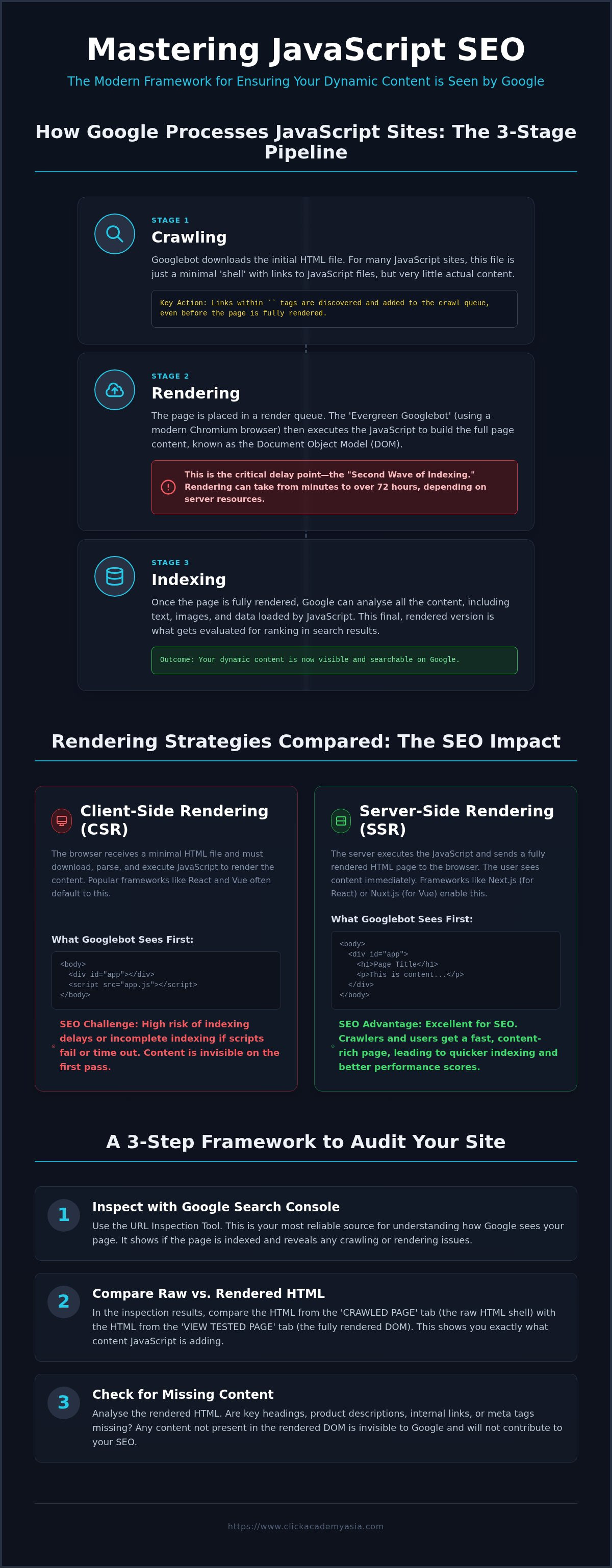
Understanding the 2026 Googlebot pipeline is the first step toward mastering technical seo for javascript-heavy sites. Unlike traditional sites where Google simply reads the HTML, dynamic sites undergo a three-stage process: crawling, rendering, and indexing. Googlebot first downloads the initial HTML, identifies links for future crawling, and then places the page into a render queue. This queue is where the 'Second Wave' of indexing occurs. Depending on your site's authority and server speed, this delay can range from a few minutes to as long as 72 hours. This gap is often why your newly published content doesn't appear in SINGAPORE search results immediately.
The modern crawler is an 'Evergreen Googlebot', meaning it runs the latest stable version of Chromium. It can handle sophisticated ECMAScript features and modern web APIs just like a human visitor's browser would. However, relying on this capability without a strategy is risky. You can't just right-click and 'View Source' to check your SEO health anymore. That only shows the raw, often empty, HTML. To see what Google actually sees, you must look at the rendered Document Object Model (DOM) after the JavaScript has finished its work.
For a deeper dive into these mechanics, Google's guide to JavaScript SEO provides the technical foundation every marketer should understand. If you find these concepts challenging, consider upskilling through a WSQ-certified digital marketing training programme to gain hands-on experience with these tools.
Understanding the Rendering Pipeline
There is a massive difference between the initial HTML response and the fully rendered DOM. Googlebot initially sees the shell of your site. If your critical content or SEO metadata isn't present until the JavaScript executes, you are at the mercy of the render queue. Use the 'Live Test' feature within the Google Search Console URL Inspection tool to compare these two states. If your rendered HTML is missing key paragraphs or titles that appear in the 'View Source' version, you have a rendering blockage that needs urgent attention.
Link Discovery and Metadata in a JS Environment
Discovery remains the lifeblood of SEO. Even in a complex JavaScript environment, standard <a href> tags are non-negotiable. Avoid using 'onclick' events or other script-based triggers for navigation. Googlebot doesn't 'click' buttons; it extracts URLs from href attributes. Similarly, ensure your meta tags, such as titles and canonicals, are present in the initial HTML whenever possible. While Google can update these after rendering, having them there from the start reduces the risk of incorrect indexing during that critical 'Second Wave' delay.
Comparing Rendering Strategies: SSR, CSR, and the Rise of Hybrid Frameworks
Choosing the right rendering method is the most consequential decision you will make when managing technical seo for javascript-heavy sites. While Client-Side Rendering (CSR) provides a snappy, app-like feel for users by letting the browser do all the work, it often leaves search engines staring at an empty page. For SINGAPORE businesses, this risk is often too high. If your content only appears after the browser executes several scripts, you are essentially gambling on Google's render queue.
Server-Side Rendering (SSR) remains the gold standard for visibility because it delivers a fully formed page to the crawler immediately. This ensures your content is indexed without waiting for the 'Second Wave' delays mentioned earlier. For legacy systems that cannot easily switch to SSR, Dynamic Rendering acts as a useful middle-ground by serving a static version of the page specifically to crawlers. However, the 2026 trend for high-performance sites is moving toward even more sophisticated models.
Static Site Generation (SSG) and Incremental Static Regeneration (ISR) are now the preferred choices for forward-thinking PMEBs. These strategies pre-build pages during the deployment process, offering the lightning speed of static files with the flexibility of dynamic updates. It is a powerful combination that balances user performance and discoverability. Understanding these nuances is a core component of any modern technical seo for javascript-heavy sites strategy.
Server-Side Rendering (SSR) vs. Client-Side Rendering (CSR)
The primary difference between these two lies in where the work happens. CSR often suffers from a high Time to Interactive (TTI) because the browser must download and execute large JavaScript bundles before the user can do anything. In contrast, SSR provides a much faster First Contentful Paint (FCP), which is critical for content-heavy SINGAPORE e-commerce platforms. PMEBs should ask their developers: "Is our critical content rendered on the server or the client?" If the answer is client-side, your SEO is likely underperforming.
The Hybrid Approach: Hydration and Pre-rendering
Modern frameworks often use a process called 'hydration' to make static pages interactive. If not managed carefully, this can cause 'uncanny valley' UX issues where a page looks ready but doesn't respond to clicks. Pre-rendering critical pages ensures immediate search indexing while keeping the interactive benefits of JavaScript. Consult Google's official JavaScript SEO guide to understand how these methods impact your specific site architecture. Use this decision framework to guide your team:
Small, static sites: SSG is usually the most efficient and cost-effective choice.
Large e-commerce stores: SSR or ISR provides the best balance of scale and speed.
Internal tools/dashboards: CSR is acceptable since search visibility is not a priority.
A Step-by-Step Audit Framework for JavaScript-Heavy Websites
Many PMEBs in SINGAPORE feel sidelined when technical discussions turn to script execution and DOM trees. You don't need to be a coder to lead an audit, but you do need a repeatable process to protect your digital investment. Start with the 'Disable JavaScript' test in your browser. If your core marketing message or navigation vanishes when scripts are turned off, you've identified your first major hurdle in technical seo for javascript-heavy sites. This simple check reveals exactly what a crawler sees before the 'Second Wave' of rendering begins.
Next, utilise the Google Search Console 'Live Test' to compare your raw HTML against the Rendered DOM. If your primary keyword is present in your CMS but missing from the rendered version, Googlebot isn't seeing it either. For a more comprehensive look, analyse your server log files. This helps you spot if Googlebot is getting stuck on heavy script files or timing out before the page is fully processed. High-performing teams in the APAC region use these insights to ensure their crawl budget is spent on content discovery rather than script debugging.
Monitoring Core Web Vitals is also essential for dynamic environments. Heavy JS execution often blocks the main thread, leading to poor Interaction to Next Paint (INP) scores. Finally, verify that any content hidden behind tabs or accordions exists in the DOM upon initial load. If your site only fetches this content after a user click, it's effectively invisible to search engines. To ensure your overall strategy is sound, you can master these techniques through WSQ Search Engine Optimisation (SEO) training designed for marketing leaders.
Essential Tools for Technical SEO Auditing
Screaming Frog is an industry staple, but you must ensure you've enabled the JavaScript rendering mode in the settings. This allows you to crawl your site exactly like Googlebot would, identifying broken links that only appear after script execution. Chrome DevTools is another vital ally for real-time inspection. Use the 'Inspect' feature to view the final rendered state of your pages and check for console errors that might block rendering. Aligning these technical checks with Advanced Keyword Research Strategies ensures your content is both visible and relevant to your target audience.
Identifying and Fixing Common JS SEO Errors
Check your robots.txt file to ensure you aren't accidentally blocking .js files. Google needs access to these scripts to render your pages correctly; blocking them is a common cause of 'partial rendering' issues. Another frequent problem is the 'Soft 404'. This occurs when a Single Page Application displays a 'Not Found' message to the user but still sends a 200 OK status code to the crawler. Always ensure your server communicates the correct HTTP status codes to prevent Google from indexing dead-end pages. Build your team's technical confidence by enrolling them in a WSQ-funded digital marketing programme today.
Upskilling for the Future: Integrating Technical SEO into Your WSQ Training Path
Mastering the nuances of technical seo for javascript-heavy sites is the ultimate bridge between your marketing vision and your engineering team's execution. In a fast-moving digital ecosystem, PMEBs who can speak the language of rendering pipelines and DOM trees are the ones who drive the most successful projects. This specialised knowledge transforms you from a passive observer into a strategic advisor who can prevent costly technical debt before it happens. It's about ensuring your content is seen by both users and crawlers without compromise.
ClickAcademy Asia stands as the premier destination for professionals looking to gain these high-value skills through official WSQ Search Engine Optimisation (SEO) programmes. These courses aren't just theoretical; they're grounded in the practical realities of the SINGAPORE business landscape. By aligning your team's development with the WSQ framework, you ensure that your staff are trained to global standards while staying rooted in local market needs. This structured approach to learning provides a clear roadmap for career progression and organizational success.
One of the most significant advantages for SINGAPORE-based teams is the availability of SSG funding. Eligible SINGAPORE citizens and Permanent Residents (PRs) can access substantial subsidies to offset the costs of these industry-leading workshops. This makes upskilling an incredibly cost-effective strategy for corporate leaders who need to future-proof their workforce without overextending their budgets. Investing in your team's technical literacy today pays dividends in organic visibility for years to come.
Why Professional Certification Matters in 2026
Credibility is the currency of leadership in the APAC region. Holding a WSQ-certified qualification in SEO provides tangible proof of your expertise, allowing you to lead digital transformation projects with absolute confidence. You'll gain the authority needed to navigate complex vendor relationships and internal stakeholders alike. APAC leaders are increasingly using this technical SEO knowledge as a primary lever to drive regional growth and capture market share from less agile competitors.
Actionable Next Steps for Marketing Leaders
Your path to mastery starts with a few decisive actions. First, perform an immediate audit of your existing dynamic content using the framework provided in this guide. Next, schedule a consultation with your HR department to explore how you can leverage SkillsFuture credits and SSG funding for team-wide upskilling. Closing the skills gap is the only sustainable way to ensure your organic ROI remains high as web technologies evolve. Mastering technical seo for javascript-heavy sites isn't just about rankings; it's about building a resilient, future-ready career.
Secure Your Digital Future with Technical SEO Mastery
The complexity of modern frameworks doesn't have to be a barrier to your brand’s success in SINGAPORE. By implementing robust rendering strategies and a disciplined audit process, you ensure that your most innovative features remain visible to search engines and valuable to your customers. Mastering technical seo for javascript-heavy sites allows you to transform technical challenges into a distinct market advantage across the APAC region.
As an Official Google Certification Partner, ClickAcademy Asia provides the WSQ-certified training excellence you need to lead with authority. With SSG funding available for eligible SINGAPORE professionals, it's the ideal time to formalise your skills and future-proof your career. Equip your team with the technical mastery needed to dominate search results; explore our WSQ-funded Search Engine Optimisation (SEO) courses today. You have the tools to succeed, and we're here to help you apply them.
Frequently Asked Questions
Can Google index JavaScript content in 2026?
Yes, Google can index JavaScript content using its evergreen Chromium rendering engine. It's important to understand that this process is more resource-intensive and often happens in a separate phase after the initial HTML crawl. Relying solely on Google’s ability to render scripts without a clear strategy for technical seo for javascript-heavy sites can lead to delayed indexing or missing content during that critical first wave of discovery.
How do I check if my JavaScript is being indexed correctly?
You should use the URL Inspection tool within Google Search Console to verify your site's indexing health. Compare the 'Raw HTML' against the 'Rendered HTML' to see if your critical marketing copy and metadata appear in the final DOM. If the text you want to rank for is missing in the rendered view, Google isn't seeing it. This discrepancy is a clear sign that your dynamic content is hidden from search engines.
What is the difference between Server-Side Rendering and Client-Side Rendering for SEO?
Server-Side Rendering (SSR) generates the full HTML on the server before sending it to the browser, making it immediately available to crawlers. Client-Side Rendering (CSR) sends a shell and requires the browser to execute JavaScript before any content is visible. SSR is generally the gold standard for search visibility because it bypasses the delays and resource costs associated with Google’s render queue. It ensures your content is indexed faster and more reliably.
Does JavaScript slow down my website's SEO performance?
JavaScript can negatively impact SEO if it leads to poor Core Web Vitals, particularly Interaction to Next Paint (INP) and Largest Contentful Paint (LCP). Large script bundles increase load times and processing costs for both users and search engine bots. Optimising your code and using modern rendering techniques are essential to maintain high rankings and a smooth user experience in the competitive SINGAPORE market. Efficiency is the key to maintaining a healthy crawl budget.
Are WSQ-certified SEO courses in Singapore eligible for SkillsFuture funding?
Yes, WSQ-certified SEO courses in SINGAPORE are eligible for SSG funding for Singaporeans and Permanent Residents. This financial support makes high-level professional development much more accessible for PMEBs looking to master technical seo for javascript-heavy sites. You can often use your SkillsFuture credits to further offset the remaining course fees. It is a cost-effective way to ensure your team stays ahead of the latest technical requirements and rendering trends.
Which JavaScript framework is the most SEO-friendly for large sites?
Frameworks that support hybrid rendering, such as Next.js or Nuxt.js, are currently the most SEO-friendly options for large-scale applications. These tools allow you to pre-render pages on the server while maintaining the interactive benefits of JavaScript for the user. This balance ensures that search engines can easily crawl and index your content without sacrificing the modern, app-like experience. Choosing a framework with built-in SSR or SSG capabilities is a vital strategic decision.
How does the 'second wave' of indexing affect my content's visibility?
The 'second wave' refers to the delay between Googlebot’s initial crawl of your HTML and the subsequent rendering of your JavaScript. This gap can cause your content to be invisible or incorrectly indexed for several hours or even up to 72 hours. Reducing your site's reliance on client-side scripts helps minimise this visibility gap. Faster rendering ensures your latest updates and product launches appear in search results without unnecessary delays that could hurt your ROI.
What are the most common JavaScript SEO mistakes PMEBs should avoid?
Common mistakes include blocking essential .js files in your robots.txt and using non-standard links like 'onclick' events instead of proper <a href> tags. Many PMEBs also overlook 'soft 404' errors where a page looks empty to users but incorrectly tells search engines the page is functioning. Avoiding these technical pitfalls is crucial for maintaining a healthy digital presence. Ensuring your server communicates the correct HTTP status codes is a simple but vital fix for many dynamic sites.


Comments