
Social Media and Influencer Marketing: A Strategic 2026 Integration Guide

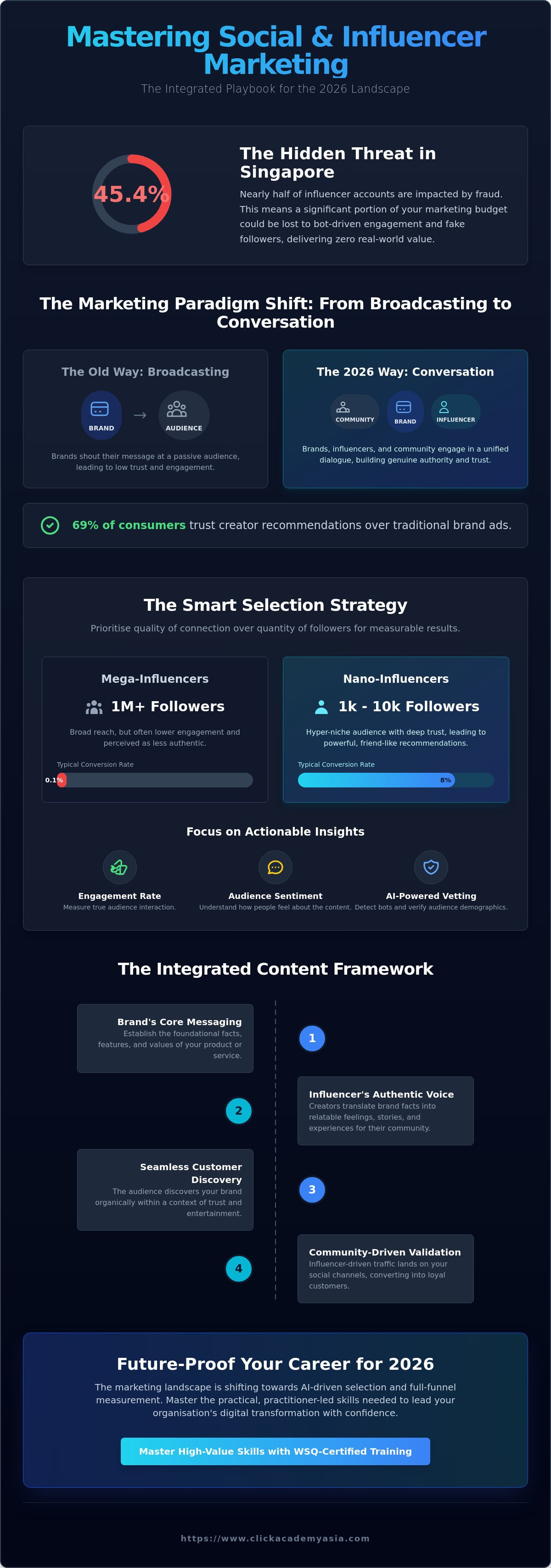
According to a 2024 report by HypeAuditor, 45.4% of influencer accounts in Singapore are impacted by fraud, which means nearly half of your marketing spend could be vanishing into a void of bot-driven engagement. You likely already know that managing fragmented campaigns across different platforms feels like a constant uphill battle. It's frustrating to pour resources into partnerships when the ROI remains a mystery or when your internal teams are working in silos rather than as a unified force.
This guide will show you how to bridge that gap by masterfully combining Social Media and Influencer Marketing into a single, cohesive engine for growth. You'll learn how to harmonise your brand's presence with strategic partnerships to drive measurable results and establish lasting authority. We're here to help you move past the guesswork and start using practitioner-led strategies that actually deliver a return on every S$1 spent.
We'll explore the 2026 shift toward AI-driven selection and provide a clear framework to help you master these high-value digital skills for professional recognition. By the end of this article, you'll have a roadmap to future-proof your career and lead your organisation's digital transformation with confidence.
Key Takeaways
Learn how to integrate Social Media and Influencer Marketing to shift from one-way broadcasting to high-impact community conversations that build genuine brand authority.
Discover why prioritising nano-influencers and audience sentiment over raw follower counts drives higher engagement and deeper trust with your target audience.
Map out an integrated content framework that synchronises your brand’s messaging with influencer voices to guide customers seamlessly through the discovery and validation phases.
Master the art of tracking ROI by moving beyond vanity metrics to use UTM parameters and full-funnel measurement for clear, measurable growth.
Explore how practitioner-led, WSQ-certified training empowers your team to manage marketing budgets with the confidence and practical expertise required for the 2026 landscape.
Table of Contents Why Social Media and Influencer Marketing are Inseparable in 2026 Identifying the Right Partners: Beyond Vanity Metrics Creating an Integrated Campaign Framework Measuring ROI: Moving Past Likes and Comments Master the Craft: Practitioner-Led Training for Leaders
Why Social Media and Influencer Marketing are Inseparable in 2026
By 2026, the distinction between brand-led content and creator-led stories has effectively vanished. Successful brands treat Social Media and Influencer Marketing as a single, unified engine rather than separate departments. Your social channels provide the brand’s core voice, while influencers act as the community’s echo, validating your message through a lens of established trust and relatability.
This synergy is no longer optional because the way people buy has changed. We have moved away from a "broadcasting" model, where brands shout at audiences, to a "conversation" model. In this environment, your brand provides the facts, but the creator provides the feeling. To better understand how to integrate these elements effectively, watch this helpful video:
The trust deficit is a primary hurdle for modern marketers. Recent industry data shows that 69% of consumers prioritise creator recommendations over traditional brand advertisements. This shift explains why Singaporean businesses are increasingly adopting professional frameworks to manage these relationships. Adhering to WSQ standards helps professionalise these marketing functions, ensuring that campaigns are both ethical and results-driven. Professionals looking to lead this shift can find practitioner-led training at ClickAcademy Asia to master these evolving strategies.
The Core Differences and Shared Goals
Brand-owned content gives you total control over the narrative and visual identity, but creator-led content provides the raw authenticity that drives modern sales. While the methods differ, the objectives remain identical: awareness, engagement, and conversion. For a comprehensive overview of influencer marketing, it is clear that the discipline has evolved into a sophisticated bridge between a product and a specific lifestyle. Your social media presence serves as the "home base" where influencer-driven traffic eventually lands to be converted into loyal customers.
The 2026 Shift: From Celebrity to Community
Massive follower counts are now considered a vanity metric. In 2026, niche authority and "micro-communities" are the primary drivers of sustainable growth. Brands are ditching one-off sponsored posts in favour of long-term partnerships that resemble genuine advocacy. This community-led growth ensures your brand remains a constant, trusted part of the audience's daily digital life. By prioritising depth of connection over breadth of reach, marketers can achieve higher conversion rates with smaller, more targeted budgets.
Identifying the Right Partners: Beyond Vanity Metrics
High follower counts are often smoke and mirrors. In the Singapore market, where 89% of the population is active on social platforms, the sheer volume of content makes genuine attention a scarce resource. You must prioritise engagement rates and audience sentiment over raw numbers. A creator with 2 million followers might yield a 0.1% conversion rate, while a niche Singaporean expert with 5,000 followers hits 8%. Successful
Social Media and Influencer Marketing
in 2026 relies on the quality of the connection, not the size of the crowd. The rise of nano-influencers has changed the game. These creators, typically with 1,000 to 10,000 followers, often outperform accounts with 100,000 passive fans because their community trusts their word like a friend's recommendation. To ensure your budget is well-spent, use AI tools to detect bot activity and verify audience demographics. If a local influencer's following is 40% based outside of Asia without a clear reason, their impact on your Singapore-based campaign will be negligible.
The Four Tiers of Influence
Choosing the right partner requires matching their reach to your specific campaign KPIs. You can categorise influencers into four distinct tiers:
Mega (1M+ followers): Best for massive brand awareness and top-of-funnel reach.
Macro (100k - 1M followers): Ideal for reaching broad but specific interest groups across the region.
Micro (10k - 100k followers): The "sweet spot" for high engagement and building brand consideration.
Nano (1k - 10k followers): The engine of 2026 conversion, offering hyper-local influence and high trust levels.
As noted in a
, micro-influencers often generate 60% more engagement than celebrity-tier accounts. Your framework should prioritise Nano and Micro tiers for ROI-driven campaigns while reserving Mega influencers for seasonal launches.
Vetting for Authenticity and Professionalism
Professionalism is just as vital as reach. You need a partner who aligns with your brand's ethical standards. Start by auditing their past three months of content. Do they post consistently? How do they handle negative comments? Look for "brand fit" by checking if their creative style matches your corporate identity. Managers who undergo
are often 30% faster at spotting high-value partners because they know how to look past the aesthetic. Use this checklist for every potential partner:
Sentiment Check: Are the comments meaningful or just emojis?
Conflict Check: Have they promoted a direct competitor in the last 30 days?
Verification: Use tools like Modash or HypeAuditor to confirm their audience is real and local.
Mastering
Social Media and Influencer Marketing
Creating an Integrated Campaign Framework
Successful Social Media and Influencer Marketing in 2026 requires a framework that moves beyond isolated posts. You need a strategy that guides a Singaporean consumer from the initial spark of discovery to the final moment of influencer validation. Most buyers in Singapore now interact with a brand across four or more touchpoints before purchasing; your framework must ensure every interaction feels connected. This starts by mapping the journey: use your brand channels to build awareness and then deploy influencers to provide the social proof that closes the sale.
Synchronising your content calendars is the next vital step. Your brand messaging and influencer outputs should function like a well-rehearsed orchestra. If you are launching a sustainable fashion line in Orchard Road this July, your influencer partners should be teasing the collection in June. This alignment prevents "content fatigue" and ensures your audience receives a consistent message across different feeds. When your brand and your creators speak the same language at the same time, the impact on brand recall is significantly higher.
Don't let high-quality Influencer-Generated Content (IGC) go to waste after 24 hours. Repurpose this content across your owned social channels to give your brand a more human, authentic feel. You can also amplify these results through "whitelisting," which involves running paid ads directly through the influencer’s own social handle. This technique often results in a 25% higher click-through rate in the Singapore market because the content appears as a peer recommendation rather than a corporate interrupt. Focus on measuring ROI by tracking how these whitelisted ads perform against your standard brand-led creative.
The Content Multiplier Effect
You can transform a single high-quality influencer video into ten distinct pieces of social content. A 60-second YouTube Short can be sliced into three punchy TikToks, two Instagram Reels, and several static quote graphics for LinkedIn. This approach maximises your budget and keeps your feeds active without needing constant new shoots. While you must maintain a consistent brand voice, give your creators the autonomy to use local slang or "Singlish" where appropriate. A local food brand recently achieved a 40% increase in engagement by allowing creators to film in their own kitchens rather than using a polished studio set.
Legal and Ethical Considerations
Trust is the foundation of Social Media and Influencer Marketing, and losing it is costly. In Singapore, following the Advertising Standards Authority of Singapore (ASAS) guidelines is mandatory. Ensure every paid partnership is clearly labelled with #ad or #sponsored to maintain transparency with your audience. Draft clear briefs that outline your brand safety requirements while leaving enough room for creative freedom. To stay updated on these evolving regulations and master the latest tactics, explore Mastering the 2026 Landscape: WSQ Digital Marketing Courses in Singapore for practitioner-led training.
Measuring ROI: Moving Past Likes and Comments
Vanity metrics don't pay the bills. While a high follower count looks impressive on a slide deck, it rarely reflects the health of your bottom line. In Singapore, where digital advertising spend is projected to exceed S$1.5 billion in 2024, every marketing dollar must be accountable. You need a full-funnel measurement strategy for Social Media and Influencer Marketing that tracks the journey from initial discovery to final conversion.
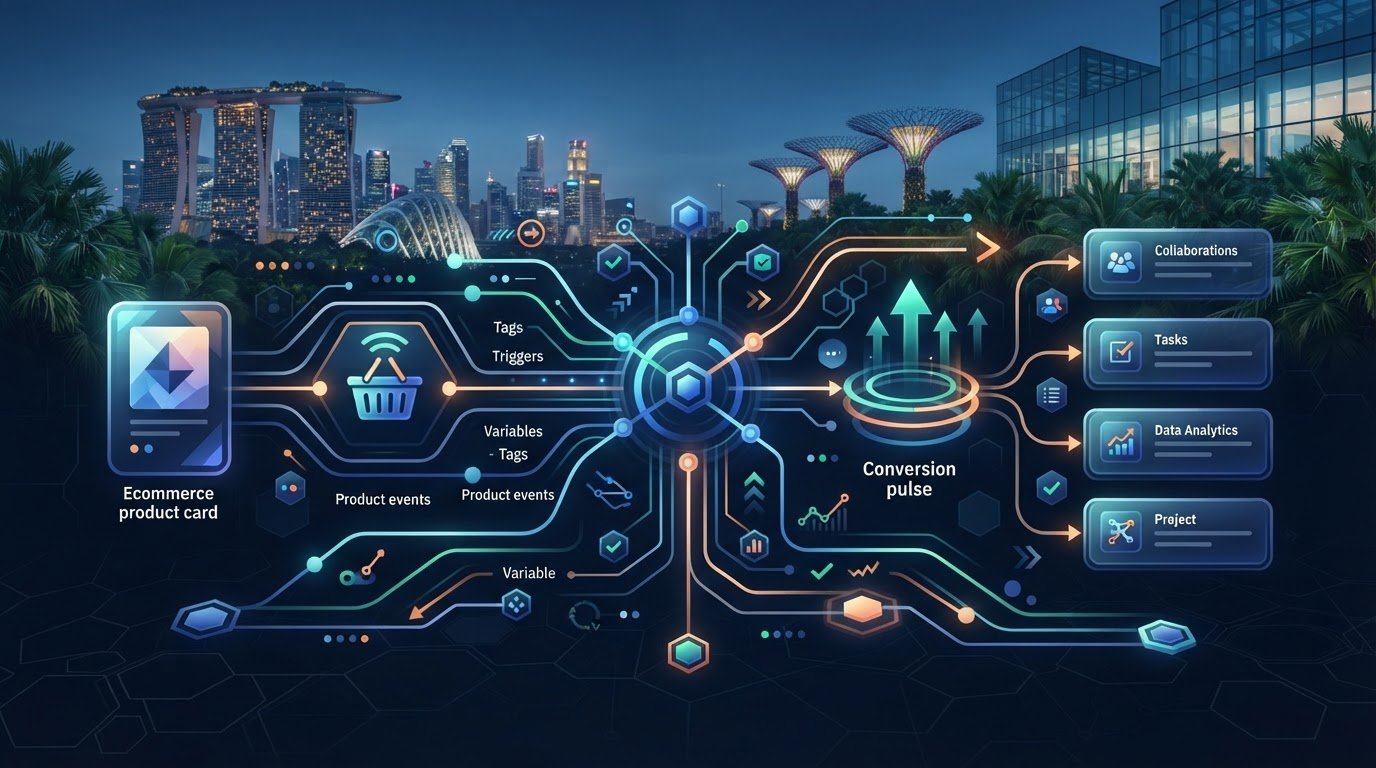
Start by deploying UTM parameters for every link shared by your partners. These tracking tags allow you to see exactly which creator or platform is driving traffic to your site. Pair these with unique discount codes to capture offline sales or app-based conversions that pixels might miss. Beyond direct revenue, you should analyse Earned Media Value (EMV). This metric assigns a monetary value to the organic reach and engagement gained through mentions and shares, helping you quantify long-term brand equity that isn't immediately visible in a sales report.
Google Analytics 4 (GA4) is your most powerful ally in this process. It allows you to move away from siloed data and see how social touchpoints contribute to a sale days or even weeks later. By identifying the specific paths users take, you can stop guessing which platforms deserve your investment and start scaling based on hard evidence.
Attribution Models for the Modern Marketer
Understanding how credit is assigned is vital for any professional. First-touch attribution gives all the credit to the very first ad or post a user saw, while last-touch attribution rewards the final click before a purchase. However, these models are often too simplistic. Data-driven attribution is the gold standard; it uses machine learning to distribute credit across all interactions based on how much they influenced the final decision.
Modern consumers in Singapore typically require six to eight touchpoints before committing to a purchase. A multi-touch view is essential because it reveals how an initial influencer video might have sparked interest that was later closed by a retargeting ad. Use cross-platform tracking tools to monitor engagement and sentiment, ensuring that the "buzz" you're creating is actually building a positive brand association.
Identifying and Eliminating Budget Waste
Efficiency is the hallmark of a master marketer. You must spot underperforming campaigns within the first 72 hours to prevent budget bleed. A/B testing is the most effective way to do this. Run influencer-generated creative alongside your own brand assets to see which resonates better with your target audience. Often, the less-polished influencer content outperforms high-production brand ads because it feels more authentic to the platform.
Keep a constant eye on your Cost Per Acquisition (CPA), which is the total campaign spend divided by the number of new customers acquired. If your CPA is higher than the profit margin on your product, the campaign is unsustainable. By constantly refining your creative and targeting based on these numbers, you ensure your budget is always flowing toward high-performing assets.
Ready to turn your social data into a roadmap for growth? Master the latest digital marketing strategies with our practitioner-led courses designed for the Singapore market.
Master the Craft: Practitioner-Led Training for Leaders
Managing a marketing budget in 2026 requires more than just a passing familiarity with trends. Theoretical knowledge won't protect your ROI when you're allocating S$200,000 across multiple platforms. You need the technical proficiency to analyse data and pivot strategies in real time. ClickAcademy Asia bridges the gap between digital theory and high-stakes execution by providing training grounded in the current market.
Many leaders struggle because their knowledge is static. A 2023 study showed that 70% of digital transformations fail due to a lack of internal skills. By 2026, this gap will only widen for those who don't pursue continuous education. Practitioner-led training ensures you aren't just reading a textbook; you're learning the exact workflows used by top-tier agencies in Singapore.
Why Professional Certification Matters
Industry-recognised credentials act as a seal of quality in a crowded job market. For PMEBs, these certifications demonstrate a commitment to global standards. SkillsFuture Singapore (SSG) subsidies make this high-level training highly accessible. Eligible Singaporeans and Permanent Residents can often offset a significant portion of course fees, ensuring that cost isn't a barrier to excellence.
Learning from active practitioners provides a distinct advantage. These mentors bring real-world case studies to the table, showing you how to handle Social Media and Influencer Marketing challenges that haven't even hit the mainstream yet. You'll gain insights into:
Optimising programmatic ad spend for better conversion.
Managing complex influencer contracts and compliance.
Analysing cross-platform data to prove marketing attribution.
Take the Next Step in Your Career
Ready to elevate your expertise? The WSQ Social Media Marketing module offers a deep dive into the strategies that drive modern engagement. This isn't just about posting content; it's about building a sustainable ecosystem for your brand. We encourage you to explore our full suite of digital marketing certifications to find the path that fits your goals.
Integration is the absolute key to future-proofing your career. As we look toward 2026, the lines between different digital disciplines will continue to blur. Mastering Social Media and Influencer Marketing ensures you stay at the forefront of this evolution. Empower your team with a future-ready marketing strategy and lead your organisation toward measurable success.
Master the Future of Integrated Digital Strategy
Success in 2026 requires moving away from surface-level engagement. You've learnt that Social Media and Influencer Marketing are now a single, unified engine for growth. Focus on partners who deliver genuine community impact rather than just high follower counts. By implementing a structured framework and tracking conversion-based ROI, you'll ensure every S$1 spent contributes to your business goals. It's about building trust through authentic voices while maintaining rigorous data standards.
The digital landscape changes fast; staying ahead means learning from experts who are currently managing high-stakes campaigns. ClickAcademy Asia is an official Google Certification Partner, providing the practical skills you need to lead with confidence. Our practitioner-led training ensures you're learning from real-world experience, not just textbooks. This approach bridges the gap between theory and the tangible results your brand demands in the Singapore market.
Elevate your marketing strategy with our WSQ-certified Social Media Marketing course. These SSG subsidised programmes are designed to help Singapore professionals future-proof their careers and dominate the digital space. You've got the vision; we'll give you the tools to make it a reality.
Frequently Asked Questions
What is the main difference between social media and influencer marketing?
Social media marketing focuses on managing your brand's owned channels to build a community and share updates directly with followers. Influencer marketing involves partnering with external content creators to leverage their established authority and reach a wider audience. While they are distinct, a successful strategy for 2026 requires Social Media and Influencer Marketing to work in tandem so your owned profiles can convert the traffic creators send your way.
How much should I budget for influencer marketing in 2026?
You should aim to allocate 25% to 35% of your total digital marketing spend toward creator partnerships by 2026. For a localized Singapore campaign, monthly retainers for a mix of micro and nano-influencers typically start from S$3,000 to S$7,000 depending on the industry. This investment level allows for consistent storytelling rather than one-off posts that fail to build long-term brand recall.
Can I use influencer marketing for B2B brands on LinkedIn?
LinkedIn is a powerhouse for B2B influencer marketing, where creators are often referred to as Key Opinion Leaders or KOLs. You can collaborate with industry experts to guest-post on your page or use LinkedIn Thought Leader Ads to promote their content directly to a targeted professional audience. These campaigns often see a 20% higher engagement rate compared to standard corporate sponsored updates because people trust individuals more than logos.
How do I find influencers who are actually relevant to my industry?
Start by using data-driven tools like HypeAuditor or Modash to filter creators by audience location, interests, and engagement rates. You must look for a minimum engagement rate of 3% and ensure that at least 75% of their followers are based in Singapore if you're targeting the local market. Manual vetting is also vital; spend time reviewing their past three months of content to ensure their tone aligns with your brand values.
Is influencer marketing more effective than traditional social media ads?
Influencer marketing often delivers a higher return on investment because it provides the social proof that traditional ads lack. While standard ads are excellent for reach and retargeting, creators build the trust necessary to move a customer from consideration to purchase. Integrating Social Media and Influencer Marketing allows you to use creator-generated content in your paid ads, which can reduce your Cost Per Click by up to 30%.
What are the most important KPIs to track for an integrated campaign?
Focus on the Conversion Rate and the Cost Per Acquisition (CPA) rather than just likes or shares. Track the Earned Media Value (EMV) to understand what the equivalent reach would have cost you through paid advertising channels. Use unique promo codes or UTM tracking links for every influencer to see exactly which partners are driving the 80% of your sales revenue.
How do I ensure influencers follow my brand guidelines?
Create a comprehensive creative brief that outlines your brand's "must-haves" and "no-gos" without stifling the creator's natural voice. In Singapore, it's mandatory to comply with the ASAS (Advertising Standards Authority of Singapore) guidelines, so ensure your contract requires clear disclosures like #ad or #sponsored. A practitioner-led approach involves reviewing drafts 48 hours before they go live to catch any misalignments early.
Are there government subsidies available for digital marketing training in Singapore?
Singaporean citizens and Permanent Residents can access substantial funding through SSG and WSQ frameworks for professional upskilling. Eligible individuals can receive up to 70% off course fees, and SMEs may qualify for up to 90% funding through the SkillsFuture Enterprise Credit (SFEC). These grants empower your team to master the latest digital strategies and stay competitive in a rapidly changing regional market.


Comments